Real estate leads with no upfront cost? Okay, what’s the catch? Pay-at-closing programs let agents connect with potential clients without paying for leads that may never convert. And while skipping the upfront expense sounds great, the referral fee at closing deserves a closer look. |
Getting a lead is one thing; getting that person to actually convert is another. With so many consumers waiting for the market to improve, agents are facing a different challenge: figuring out what’s really keeping their clients on the sidelines. I recently surveyed The Close readers about what’s causing buyers and sellers to hesitate, and the results reveal some important conversations brokers should be having with their agents. |
|
|
|
Here's what you need to know today: |
|
| |
Generating real estate leads can get expensive, and with agents being more selective about where they spend their marketing dollars, paying for prospects who may never convert can feel like a waste. But what if you didn’t have to pay for those leads upfront? That’s where pay-at-closing real estate leads come in. Instead of paying for leads before you know whether they’ll actually buy or sell, these programs typically charge a referral fee when a transaction successfully closes. For agents with limited marketing budgets or those hesitant to invest in traditional paid lead generation, this can be an appealing alternative.
|
I’ve actually used pay-at-closing leads through Zillow during my real estate career, and they’re a great option more agents should know about. Many agents are already curious, with more than 10,000 users checking out our guide to the best real estate pay-at-closing lead sources. Of course, there’s a catch. You’re trading the upfront expense for a percentage of your commission at closing, which can take a significant bite out of your earnings depending on the provider. That’s why you should understand the referral fee, eligibility requirements, and lead quality before signing up.
I wouldn’t recommend relying entirely on pay-at-closing leads, but they can be a valuable addition to your lead generation strategy. As a newer agent, I found them especially helpful for building my database, gaining experience, and establishing my reputation without spending money upfront. You can potentially connect with buyers and sellers without taking on the same upfront financial risk as traditional paid leads. The key is making sure the commission you keep is worth the time and resources you invest in each client.
What this means for agents: 💰 Explore alternatives to upfront spending: Pay-at-closing programs may help you generate business without committing a large marketing budget. 🧠 Know your referral fees: Understand exactly what percentage of your commission you’ll owe and how that affects your earnings. 🔎 Evaluate lead quality: Not every referral will be ready to transact. Ask how leads are generated, qualified, and distributed. |
|
|
|
Do you earn a livable income from real estate sales alone? |
|
|
|
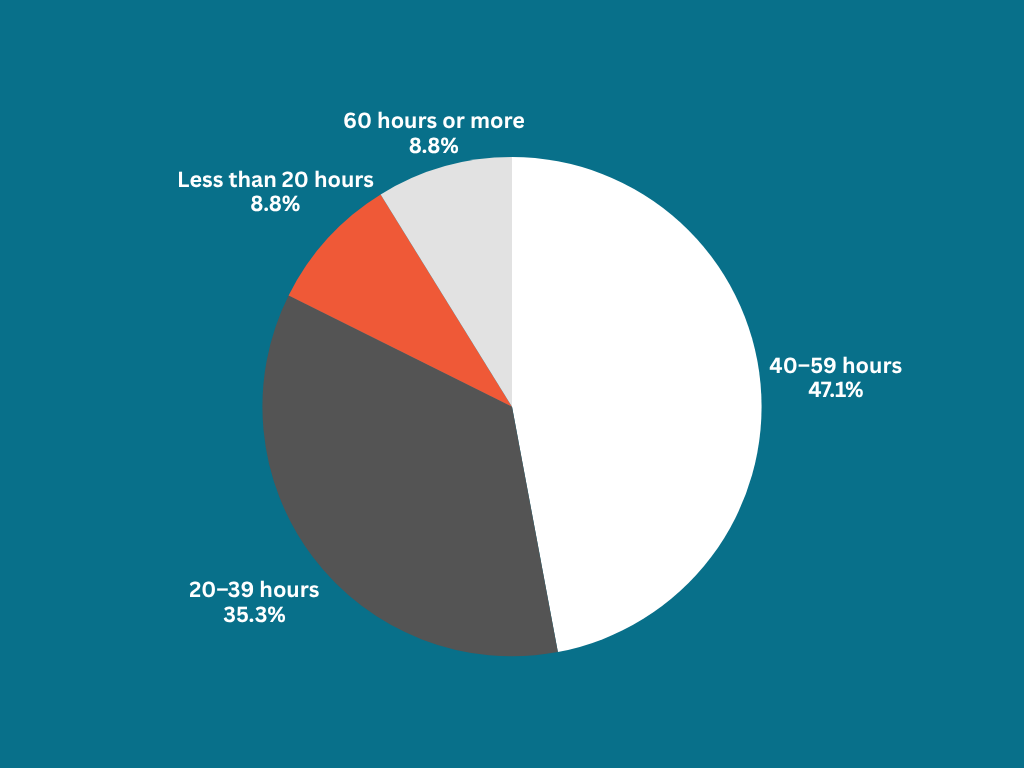
How many hours do you typically work per week as a real estate agent? |
|
|
|
Is buying an investment property still worth it? With mortgage rates remaining elevated, insurance and maintenance costs climbing, and rental markets performing differently across the country, it’s a fair question. But investors haven’t disappeared. According to recent Realtor.com research, smaller investors accounted for 66.2% of investor home purchases during the first half of 2026, reaching an 11-year high in their share of investor purchases.
|
For investors, I think the bigger question isn’t necessarily whether real estate is still a good investment, but what makes a property worth buying in today’s market. Lower-priced homes in affordable markets may offer better opportunities to generate rental income, but a low purchase price doesn’t automatically mean a good deal. Investors need to look at local rental demand, vacancy rates, property taxes, insurance, and how much they’ll actually earn after expenses.
The opportunity is still there, but the margin for error may be smaller. Investors who once relied heavily on rising property values or steady rent increases may need to rethink their approach. Instead of assuming a property will become profitable over time, focus on whether the numbers work today. Real estate investing isn’t necessarily becoming less attractive. It’s becoming less forgiving of bad purchases.
What investors should consider: |
- Purchase price: Affordable properties may offer better entry points, but only if the potential rental income supports the investment.
- Location: Look for markets with consistent rental demand, manageable vacancy rates, and economic stability.
-
Cash flow: Calculate what remains after mortgage payments, taxes, insurance, maintenance, and other operating expenses.
|
Your Move This Week: 🏠 Research affordable markets with strong rental demand. ⚖️ Compare rental prices and vacancy rates in your target neighborhoods.
🏦 Understand financing options and how they affect your potential returns. |
|
|
|
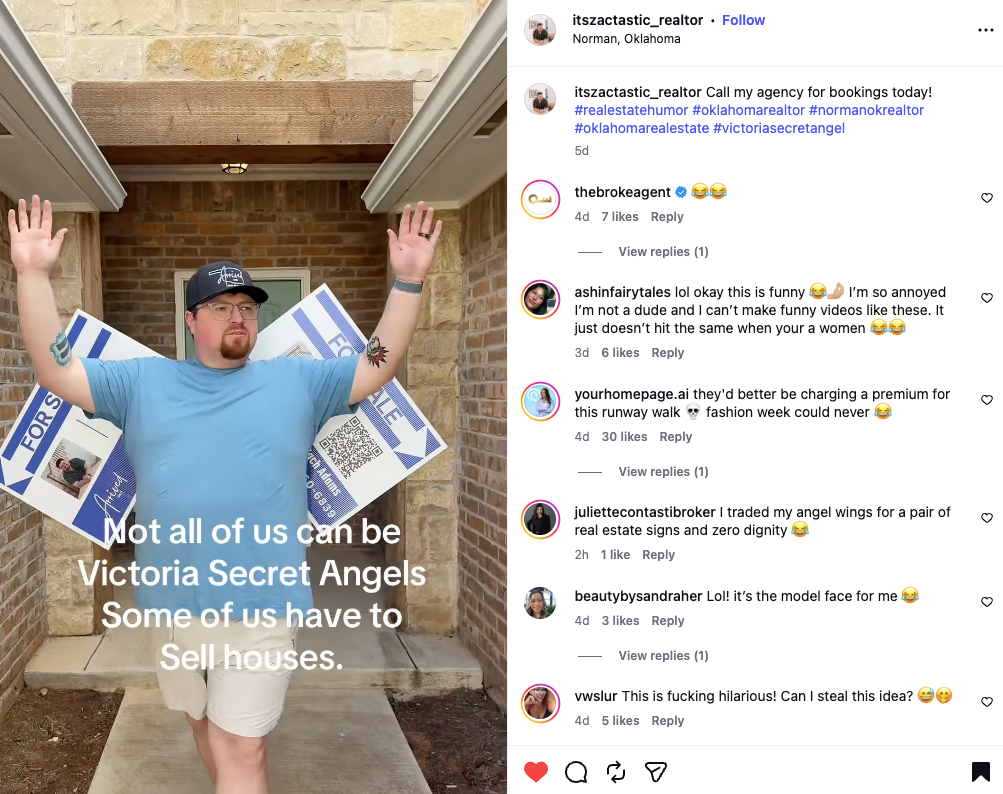
Who says real estate agents can’t have their own runway moment? Realtor Zach Adams took inspiration from the Victoria’s Secret Fashion Show and created his own version, swapping angel wings for real estate signs. The result is a hilarious Reel that turns a recognizable pop culture moment into a playful reminder of what he does for a living, without ever asking anyone to buy or sell a home.
What I love about this video is how simple the concept is. Adams took something people were already talking about, added a real estate twist, and made it his own. There’s no complicated production, elaborate script, or expensive marketing campaign. Just a little creativity, a sense of humor, and a willingness to have fun with his profession. It’s the kind of content that can make someone stop scrolling, laugh, and maybe even share it with a friend. |
Screenshot via itzactastic_realtor |
But there’s also a smart marketing strategy behind the humor. Not every post needs to promote a listing, celebrate a closing, or ask for referrals. Sometimes, simply reminding your audience that you’re an agent while showing off your personality is enough. Adams is staying connected to real estate in a way that feels entertaining rather than promotional. And when someone in his audience eventually needs an agent, that familiarity could help keep him top of mind.
The broader lesson is to look for opportunities to connect what’s happening in pop culture with your business. A trending event, viral moment, or familiar joke can become an opportunity to create content that feels relevant and fun. You don’t have to force a sales pitch into every post to market yourself effectively. Sometimes, a pair of real estate signs and a runway walk can do the job.
|
|
|
|
When a buyer or seller says they’re waiting for the market to improve, do your agents know how to respond? I recently surveyed newsletter readers to better understand what’s keeping buyers and sellers on the sidelines, and the results are definitely worth bringing to your next office meeting. More than 70% of agents surveyed said clients were delaying decisions because of elections, while 86.2% reported delays tied to economic concerns. Meanwhile, 83.1% said unrealistic seller expectations remained an issue to some degree. These numbers suggest hesitation goes beyond mortgage rates and home prices.
|
Brokers should make sure their agents understand what’s actually behind these concerns. A buyer who says they’re waiting for rates to drop might really be worried about affordability or job security. A seller holding out for a higher price might be concerned about affording their next home. And someone waiting for an election may be hoping it brings some economic stability. Rather than immediately trying to overcome these objections, train agents to ask better questions, listen to clients’ concerns, and understand what they hope will change.
I’d make this a training exercise at your next office meeting. Walk through common buyer and seller objections, discuss the fears behind them, and practice responding with relevant local market information. Agents should understand how inventory, pricing, mortgage rates, and competition could affect their clients’ decisions without making predictions or pressuring anyone to act. The goal isn’t to convince every hesitant client to buy or sell today. It’s to give our agents the knowledge and confidence to help clients make informed decisions, even when the market feels uncertain.
What’s working right now: |
- Bring the survey to your next office meeting: Share the findings from The Close’s latest report and discuss whether your agents are hearing similar concerns in your market.
-
Teach agents to ask why: Encourage agents to get to the root of a client's hesitation before jumping into a sales pitch.
- Practice common objections: Roleplay conversations with common objections such as buyers waiting for lower rates, sellers holding out for higher prices, and clients concerned about the economy.
|
|
|
|
🗳️ Florida voters approve major property tax relief: Realtor.com highlights that Amendment 3 passed with roughly 62% support, paving the way for a $250,000 homestead exemption by 2028 while raising questions about local government funding.
🎬 Sundance Film Festival opens new rental opportunities for homeowners: Business Insider explains that Boulder is temporarily easing Airbnb restrictions to accommodate an expected 100,000 festival visitors, giving residents a chance to cash in on the demand.
🥊 Major brokerages challenge Compass in the battle over listings: CNBC reports that four of the nation’s largest brokerages are launching Open Real Estate, a shared national listing database designed to counter the rise of private listings and improve access to housing information. |
|
|
|
|
Sophia Doyle is a staff writer at The Close and a licensed New Jersey real estate agent with hands-on experience in residential real estate. Sophia brings real-world insight into today’s housing market, combining on-the-ground agent experience with a strong background in communications. She understands the full transaction lifecycle, from lead generation and client relationships to marketing strategy and deal execution. Through her writing, Sophia delivers clear, practical guidance to help agents navigate an evolving industry with confidence and creativity.
|
|
|
|
Advertise in The Close The Close is a TechnologyAdvice business © 2026 TechnologyAdvice, LLC. All rights reserved. TechnologyAdvice, 3343 Perimeter Hill Dr, Suite 215 Nashville, TN 37211, USA |
|
|
|
|