Skip the coffee, cancel the subscription, and stop buying toys. Then you can afford a house, right? Not quite. Millions of young adults are staying with their parents longer, and the numbers suggest the problem goes far beyond discretionary spending. For agents, that affordability squeeze could also be reshaping what a desirable home looks like. |
“Just stop buying coffee” isn’t exactly helpful advice, nor is hitting send on the first thing AI writes for you. The Neuron Academy’s ‘Professional Writing With AI’ course can help you get more out of AI when drafting emails, messages, and other client communication, so the finished product is polished without sounding robotic. |
|
|
|
Here's what you need to know today: |
|
|
|
Nearly one in three adults under 35 lived with their parents in 2025, and the US has an estimated 4.3 million fewer households than it would if 2010 living patterns had continued. Housing costs are a major part of the problem. Homeownership remains a goal for most millennials and Gen Zers, but far fewer believe they can achieve it, and saving for a down payment now takes closer to a decade than about three years in 1990.
|
It's easy to assume young adults are simply spending money they should be saving, but the numbers tell a more complicated story. “Kidulting,” or adults spending money on toys, collectibles, and childhood experiences, is booming, but research suggests these relatively small purchases aren’t what’s keeping an entire generation from buying homes. Home prices have risen much faster than incomes, and when saving for a home can take close to a decade, cutting out smaller purchases may not meaningfully change that timeline.
I’m seeing another side of this trend in my own market: more interest in multigenerational housing. Homes with in-law suites, guest homes, or two-family layouts that can function as one larger living space are moving quickly. If more young adults are staying with family because forming a separate household is too expensive, demand doesn’t necessarily disappear. It may change what buyers need from a home, making flexible spaces that can accommodate multiple generations increasingly important.
What this means for the market: 👨👩👧👦 Living at home doesn’t eliminate housing demand: Some of that demand may shift from separate starter homes toward larger properties that can accommodate multiple generations.
💰 Pooling resources could become an affordability strategy: Families who can’t comfortably support multiple housing payments may look at what they can afford together. 🧸 Consumer spending is reflecting delayed milestones: Younger adults may still want homeownership while spending more on attainable experiences and products in the meantime. |
|
|
|
What do you think matters most to buyers during a showing? |
|
|
|
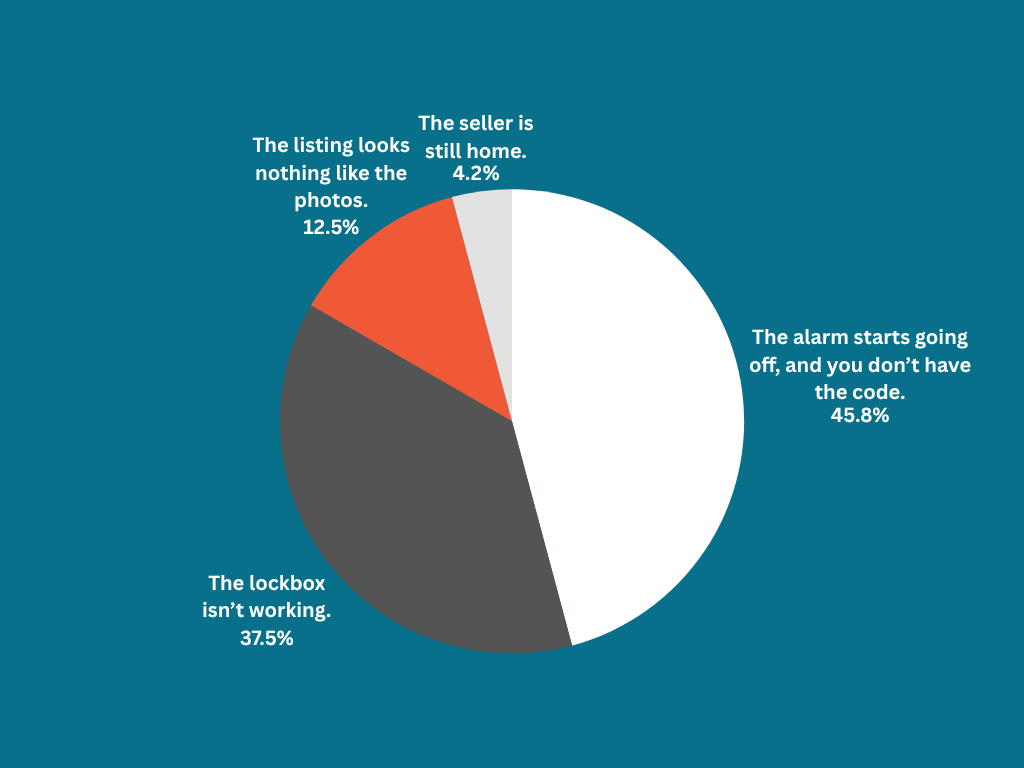
What makes you most nervous when you arrive at a showing? |
|
|
|
One of the biggest complaints about short-term rentals (STRs) may be getting harder for owners to ignore: guests don’t want to pay for a stay and then feel responsible for cleaning. Airbnb is introducing a new house rules policy on November 20 that limits what hosts can reasonably ask guests to do. Hosts can ask guests to put dishes in the sink, or gather used towels, for example, but shouldn’t ask them to wash and put away dishes, strip beds, start laundry, or take garbage off-site.
|
For short-term rental investors, I think this could ultimately be a positive shift. Hotels have long offered travelers a simple proposition: pay for the room, enjoy the stay, and leave the cleaning to someone else. STRs that come with lengthy checkout chore lists can feel like more work by comparison. By pushing owners away from those expectations, Airbnb could help put STRs on more equal footing with hotels and remove one reason some travelers may hesitate to book them.
But it also means owners need to treat turnover as a true operating expense rather than outsourcing part of it to guests. When calculating what a rental can earn, account for cleaning, laundry, trash removal, and resetting the property. The investors who adapt may end up with a stronger product: a stay that offers the space and experience of a short-term rental with more of the convenience travelers expect from a hotel.
What STR investors should consider: |
- Cleaning costs: Build the full cost of professional turnover into your numbers rather than assuming guests will complete part of it.
- Hotel competition: Compare the entire guest experience, not just your nightly rate, with nearby hotels.
-
Pricing: Make sure your nightly rate and cleaning fee can support the level of service guests increasingly expect.
|
Your Move This Week: 🧹 Review your checkout requirements. 🧮 Recalculate your true turnover costs.
⭐ Remove unnecessary guest friction. |
|
|
|
The Agent Takeaway:
With Redfin finding that the typical homebuyer’s monthly payment has climbed to $2,769, just shy of a record high, affordability conversations matter more than ever. Agents can help buyers look beyond the listing price and understand how different rates, down payments, taxes, and insurance affect their monthly costs. Setting the budget early helps buyers focus their search, avoid surprises, and recognize when a home fits their finances.
|
|
|
|
Ask your agents where their last five clients came from. If most of them name the same source, that’s something worth talking about. Organic prospecting, referrals, open houses, and working your sphere can all build business, but agents shouldn’t rely on one strategy to keep their pipeline full. Brokers can help agents see where their business comes from now and where they may have opportunities to diversify.
Paid lead generation is one option worth putting on the agenda. And agents are clearly interested in it. More than 4,000 agents have already looked at our guide of the top real estate lead generation companies. If thousands of agents are researching these platforms, there’s a good chance agents in your office are wondering about them, too. I evaluated companies across pricing, lead quality, contracts, features, and the types of agents they work best for, so the guide can be a useful starting point for that conversation.
Bring the topic into an office meeting and help agents think beyond simply asking, “Should I buy leads?” Look at what they already do well, where their pipeline is thin, what they can realistically spend, and whether they have the follow-up systems to make another lead source worthwhile. The goal isn’t to replace organized prospecting or push everyone toward the same company. It’s to help agents build a more diversified pipeline so their business isn’t overly dependent on any one source.
|
What’s working right now: |
-
Compare companies: Present our lead generation company guide at your next broker meeting and compare approaches, instead of having agents research platforms on their own.
- Do a lead source audit: Have agents identify where their last five clients came from and where they are generating their current pipeline.
-
Track what converts: Encourage agents to record the source of every lead, appointment, client, and closing. Over time, they’ll have a much clearer picture of where they are actually producing business from.
|
|
|
|
🎬 The ‘Netflix Effect’ is reshaping a New Jersey housing market: Realtor.com reports a long-abandoned former Army housing site near Netflix’s future $1 billion production campus is being transformed into a 275-home community as developers prepare for new jobs and housing demand.
⚖️ Eviction cases are becoming more complicated for landlords: Bisnow says greater access to tenant attorneys and rising habitability claims are leading to more settlements, creating new legal and financial risks for rental property owners.
💎 Luxury buyers are gaining negotiating power in major markets: Homes.com finds that 16 of 18 markets analyzed had at least three of their five priciest September sales close below asking, while San Francisco stood out with four selling above list price. |
|
|
|
|
Sophia Doyle is a staff writer at The Close and a licensed New Jersey real estate agent with hands-on experience in residential real estate. Sophia brings real-world insight into today’s housing market, combining on-the-ground agent experience with a strong background in communications. She understands the full transaction lifecycle, from lead generation and client relationships to marketing strategy and deal execution. Through her writing, Sophia delivers clear, practical guidance to help agents navigate an evolving industry with confidence and creativity.
|
|
|
|
Advertise in The Close The Close is a TechnologyAdvice business © 2026 TechnologyAdvice, LLC. All rights reserved. TechnologyAdvice, 3343 Perimeter Hill Dr, Suite 215 Nashville, TN 37211, USA |
|
|
|
|