I regret to inform you that we need to talk about mortgage rates again. They have climbed back into territory we haven’t seen in years, and the bigger concern is that buyers and sellers hoping this would be a short-lived problem may need to rethink that assumption. |
And if we’re stuck talking about mortgage rates, it’s worth knowing everything we can about them. The Neuron Academy’s Research Any Topic Faster with AI course shows you how to use AI to dig deeper into a topic, find useful information, and make sense of what you uncover. Agents can apply those skills to research mortgage rates, market trends, local developments, or whatever else clients ask about. And that’s just one of several practical AI courses available to help you research, write, create, and work more efficiently.
|
|
|
|
Here's what you need to know today: |
|
|
|
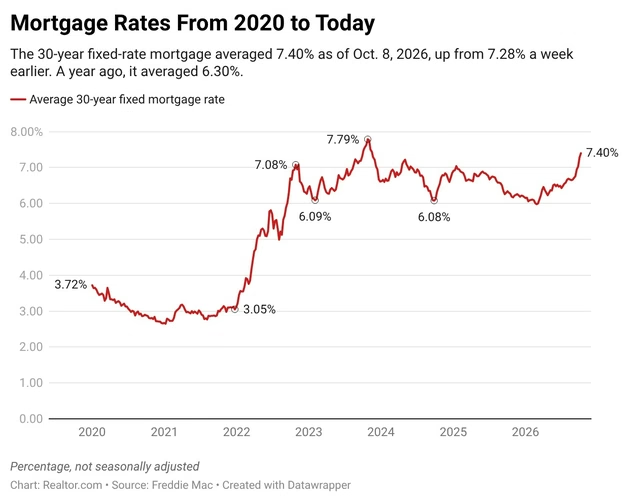
I know everyone is tired of talking about mortgage rates. I am too. But with the average 30-year fixed mortgage reaching 7.4%, its highest level since November 2023, we can’t ignore what rates are doing or, more importantly, where they could be headed next. Rates have now increased for seven consecutive weeks, up from 6.3% this time last year. |
And right now, the outlook isn’t exactly pointing toward immediate relief. Fed Governor Christopher Waller said this week that additional rate hikes are needed to bring inflation down, although he indicated they don’t need to happen at consecutive meetings. The Fed doesn’t directly set mortgage rates, but inflation and monetary-policy expectations influence the bond market, and mortgage rates have been climbing alongside the 10-year Treasury yield. That means buyers and sellers hoping rates will fall quickly may need to reconsider their timelines.
We’re already seeing the effects. Buyer demand has cooled, inventory is building, and sellers have been cutting prices faster than in the past four years. At the same time, new listings have started pulling back as some homeowners respond to weaker demand. If rates remain elevated or move higher, affordability could keep more buyers on the sidelines and put additional pressure on sellers competing for those who remain. The bigger market story now isn’t simply that mortgage rates are high. It’s that the housing market may need to operate with high rates for longer than many buyers and sellers expected.
What this means for the market: 📉 Buyer demand is under pressure: Higher borrowing costs shrink the pool of buyers who can afford current prices.
⏳ Waiting for lower rates is becoming a bigger gamble: Buyers and sellers who have based their plans on near-term rate relief may need to prepare for elevated rates to stick around longer. 🏠 New supply is starting to pull back: Some homeowners may become more hesitant to list when buyer demand weakens. |
|
|
|
Are the upcoming midterm elections affecting your local housing market? |
|
|
|
Short-term rental (STR) investors may want to look beyond the usual beach towns and vacation destinations. AirDNA’s latest ranking of 17 smaller “hidden gem” markets puts Rockford, Illinois, at No. 1, followed by Akron, Ohio, and Warner Robins, Georgia. Every market on the list had an estimated yield above 10%, with Rockford reaching 14% on an average home value just above $300,000 and roughly $42,000 in annual revenue potential.
|
These markets are interesting not necessarily because of tourism. AirDNA looked for smaller STR markets with rising revenue, growing inventory, and relatively little professional competition. That suggests investors are finding opportunities in more affordable cities where recurring demand could come from business travel, hospitals, universities, events, family visits, or other reasons people need temporary accommodations. With borrowing costs still high, a lower purchase price can also give investors more room to make the numbers work.
I wouldn’t treat a high market-level yield as a reason to buy on its own. The opportunity is in identifying why people consistently need short-term accommodations in these smaller markets and whether that demand can support an individual property. Investors should still check local regulations, occupancy, nightly rates, seasonality, insurance, financing, and competing supply. The next strong STR market may not look like a vacation destination at all.
What investors are watching now: |
- Smaller markets: Lower purchase prices can make rental revenue easier to use to support the investment.
- Recurring demand: Hospitals, universities, employers, events, and other demand generators can support stays beyond traditional tourism.
-
Growing STR demand: Rising revenue and bookings can help distinguish an emerging market from one that’s simply inexpensive.
|
Your Move This Week: 🔎 Look beyond vacation markets. 📊 Compare STR supply with demand.
🏥 Identify local demand generators. |
|
|
|
The Agent Takeaway:
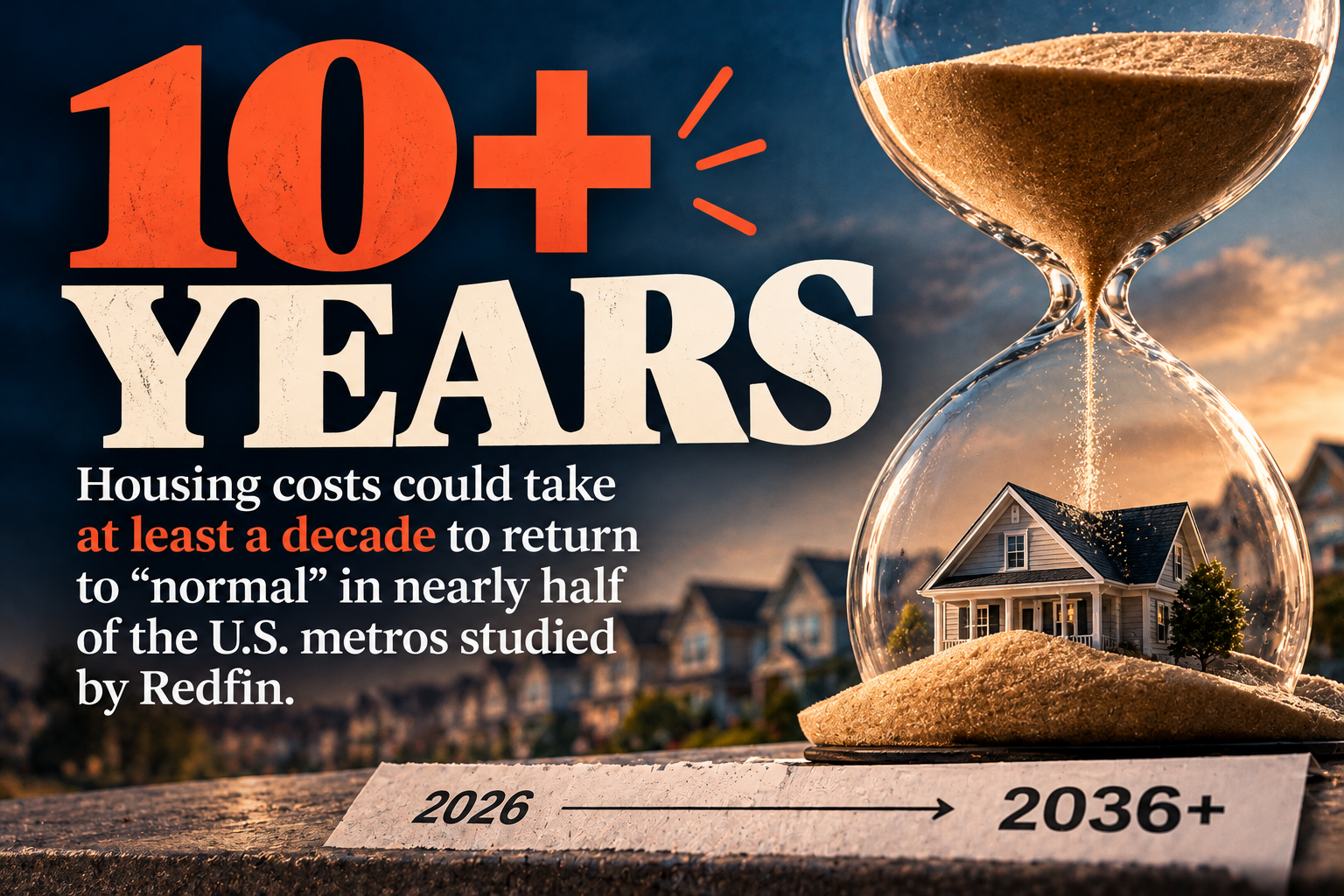
With Redfin finding that housing affordability could take more than a decade to return to 2018 levels in roughly half of the metros studied under certain scenarios, agents should be prepared for buyers wondering whether waiting will make buying easier. Help clients focus on what they can comfortably afford now, what would need to change for them to buy, and what’s happening locally. The goal isn’t to convince someone to buy, but to help them decide based on their finances rather than waiting for a “normal” market that may not return anytime soon.
|
|
|
|
Adjustable-rate mortgages (ARMs) are getting more attention as buyers look for ways to manage higher borrowing costs. In late September, the average 30-year fixed mortgage rate was 7.3% compared with 6.47% for a 5/1 ARM, according to the Mortgage Bankers Association. ARMs accounted for 10.3% of mortgage applications, up from 7% at the start of the year. With more buyers considering them, brokers should make sure their agents understand what they are and how they work.
Agents shouldn’t be advising clients on which mortgage to choose. That’s a conversation for a qualified lender. But they should understand the basics well enough to follow the conversation and recognize when a client needs more information. An ARM generally offers a lower initial rate that stays fixed for a set period before it can adjust. Agents should also understand that a buyer’s future plans, potential payment changes, adjustment caps, and ability to refinance can all factor into the decision.
This is a good topic for an office meeting or lender training. Have a mortgage professional explain common ARM structures, how adjustments work, and the questions buyers should be asking before choosing one. The goal isn’t to turn your agent into mortgage experts. It’s to make sure they aren’t caught off guard when a buyer asks about an ARM and that they know enough to say, “Here’s what I understand, and let’s bring your lender into this conversation.”
What’s working right now: |
- Bring a lender into your office meeting: Have a trusted mortgage professional give agents an ARM 101 lesson and answer the questions they’re hearing from buyers right now.
- Teach the terminology: Make sure agents understand terms like fixed period, adjustment period, rate cap, and lifetime cap so they can follow a buyer’s financing conversation.
- Practice staying in your lane: Roleplay what agents should say when buyers ask, “Should I get an ARM?” Train them to provide general context, then bring in the right lending professional.
|
|
|
|
🎯 AI could reward agents who get more specific: Inman explores why clearly defining your niche, expertise, and ideal client could make it easier for AI search tools to match you with the right buyers and sellers.
🏚️ America is losing hundreds of thousands of homes to deterioration: Realtor.com examines how a bipartisan push for federal home-repair grants could help preserve aging properties and keep more affordable homes in the housing market.
😊 Buying can still beat renting with rates above 7%: Homes.com finds that lower-and middle-priced homes can still favor buyers financially, with the price of a home relative to its potential rent often mattering more than the mortgage rate itself. |
|
|
|
|
Sophia Doyle is a staff writer at The Close and a licensed New Jersey real estate agent with hands-on experience in residential real estate. Sophia brings real-world insight into today’s housing market, combining on-the-ground agent experience with a strong background in communications. She understands the full transaction lifecycle, from lead generation and client relationships to marketing strategy and deal execution. Through her writing, Sophia delivers clear, practical guidance to help agents navigate an evolving industry with confidence and creativity.
|
|
|
|
Advertise in The Close The Close is a TechnologyAdvice business © 2026 TechnologyAdvice, LLC. All rights reserved. TechnologyAdvice, 3343 Perimeter Hill Dr, Suite 215 Nashville, TN 37211, USA |
|
|
|
|