Costco has a loyal following. But would someone pay more for a home just to live near one? New research suggests some buyers might, raising a much bigger question for agents: which neighborhood conveniences actually translate into a premium, and which ones simply make for good marketing? |
Buyers may get excited about having a Costco down the road, but a data center? That could come with a few more questions. As these facilities expand into more communities, brokers need to prepare agents for conversations about what nearby data center development could mean for a property without jumping to conclusions. |
|
|
|
Here's what you need to know today: |
|
|
|
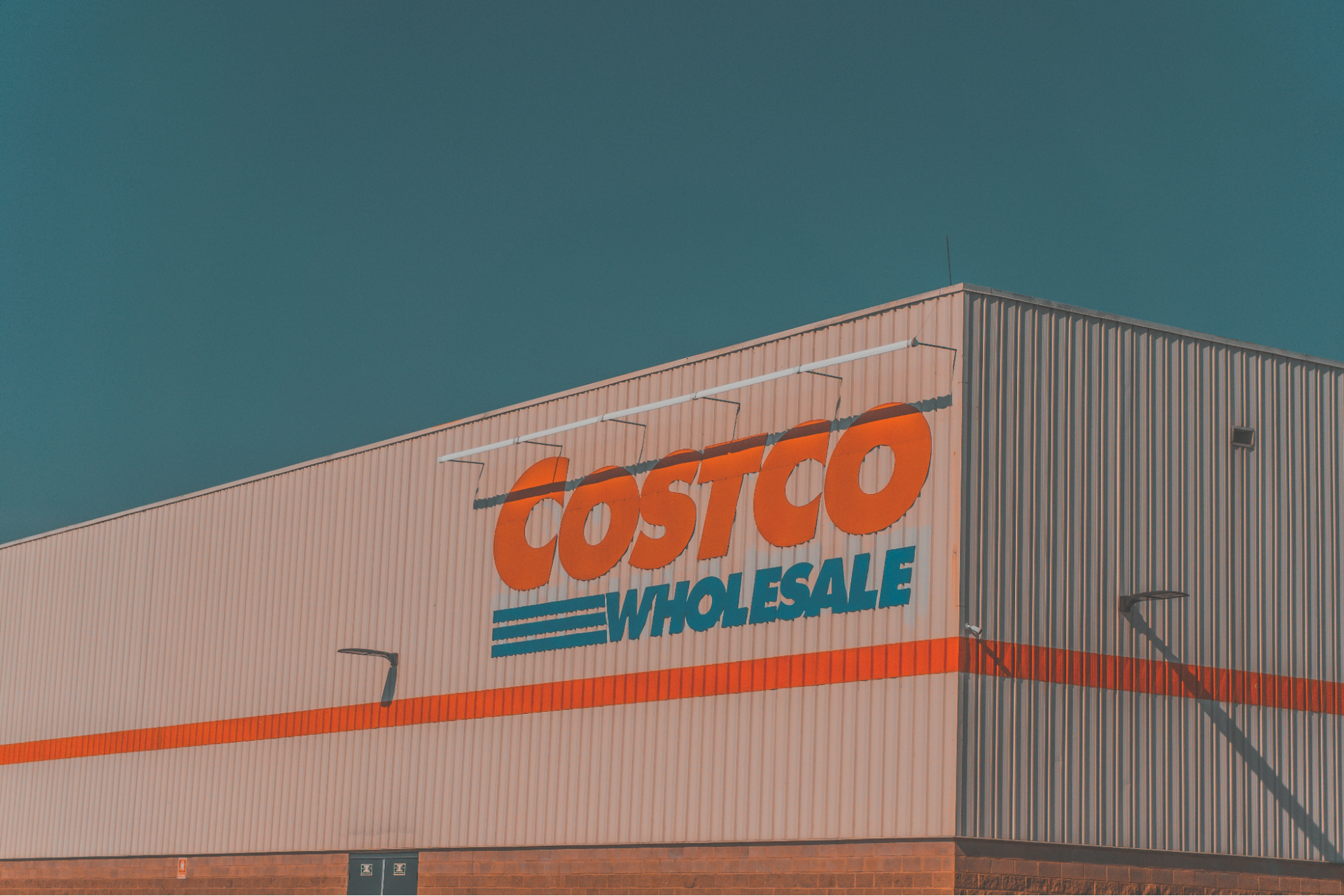
Would buyers pay more for a house because there’s a Costco nearby? In some markets, apparently yes. Research on Costco openings across the US from 2002 to 2020 found no significant national impact on home values. But within five miles of a new Costco, values increased 7.9% in counties with above-average population density and 5.2% in counties with above-average household income after 2.5 years. That suggests amenity value isn’t universal. What matters is whether buyers in that particular market actually value it.
|
This is especially useful information for agents because buyers can put a premium on features that extend well beyond the house itself. Convenient shopping, restaurants, parks, schools, commute times, and other neighborhood amenities can all become part of a property’s value proposition. But even something buyers like can have a tipping point. Living a few minutes from Costco may be convenient, while backing up to its parking lot and having to deal with traffic, lights, or delivery trucks could be a different story. Agents should pay attention not just to what is nearby, but how buyers experience that proximity.
Remember, a feature like a nearby Costco can help tell a listing's story, but it doesn’t automatically justify a higher price. Look at local comps to see whether similar homes near a particular amenity are actually selling for more, faster, or with fewer concessions. If the data doesn’t show a measurable premium, the amenity may belong in the marketing rather than the pricing. For buyers, it’s another reason to consider which conveniences they’re personally willing to pay more for rather than assuming proximity will automatically translate into resale value.
What this means for the market: 📍Convenience can carry value: Buyers may pay more for easy access to amenities they regularly use, particularly where that convenience is harder to find.
💰 Don’t assume an amenity creates a premium: Use comparable sales to determine whether buyers are actually paying more for proximity to a particular feature. 👂 Listen to what buyers keep asking for: The amenities clients repeatedly mention can give agents valuable insight into what their own market values. |
|
|
|
How effective do you think open houses are at helping sell a home? |
|
|
|
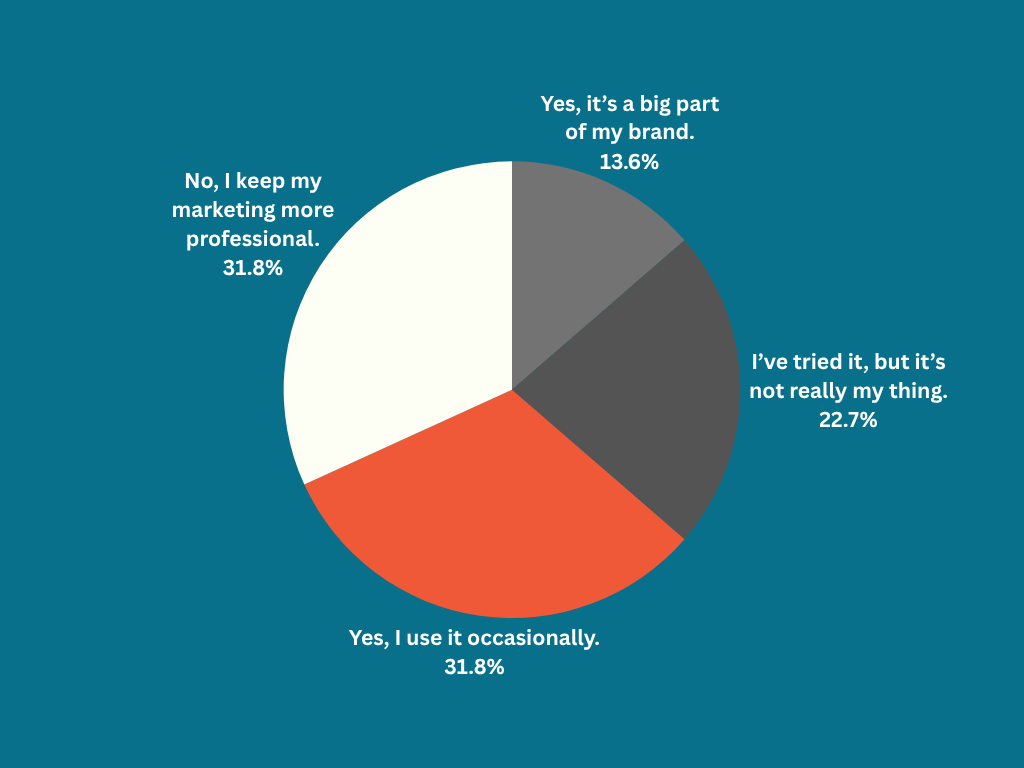
Do you use humor in your real estate marketing or personal brand? |
|
|
|
Building your real estate business? Start managing your finances for $0/month. QuickBooks Free gives solo and new business owners a simple way to keep business finances organized without a monthly subscription or credit card required. Connect a bank account, track income and expenses, send up to two invoices per month, and see how your business is performing with core financial reports.
When you’re ready for more, you can seamlessly upgrade to a paid QuickBooks plan while keeping everything you’ve already built. |
|
| |
Apartment owners are facing a major refinancing problem. More than $1.8 trillion in multifamily debt is set to mature over the next decade, including about $757 billion between 2026 and 2028. Many of those loans were taken out when rates were around 3%. Refinancing at closer to 6% can dramatically increase monthly costs, while insurance, taxes, maintenance, and other expenses rise.
For investors, the first lesson is simple: cheap debt can make a deal look stronger than it really is. Some buyers assumed low rates, rising rents, and higher property values would continue. Instead, new supply increased, rent growth slowed, and apartment values fell from their 2022 peak. Today’s investors should make sure a property still works if refinancing gets more expensive, rents grow slowly, or values decline.
The second lesson is opportunity. Some owners may be forced to sell because they can’t afford to refinance, which could bring more discounted multifamily properties to market. The key is to separate a bad property from a good property with bad debt. A strong building in a healthy rental market can still be a good investment, even if the previous owner’s financing no longer works.
What investors are prioritizing now: |
- Debt structure: Investors are looking beyond purchase price and studying when loans mature, whether rates are fixed or floating, and what refinancing could cost several years from now.
-
Refinance stress test: Deals are being modeled at higher future borrowing costs instead of assuming today’s financing terms will always be available.
- Distressed multifamily opportunities: Loan maturities may force otherwise viable apartment properties onto the market, creating opportunities for buyers with available capital.
|
Your Move This Week: 💵 Review when your loans mature. 🏦 Watch for lender-owned opportunities. 🏢 Track distressed multifamily listings. |
|
|
|
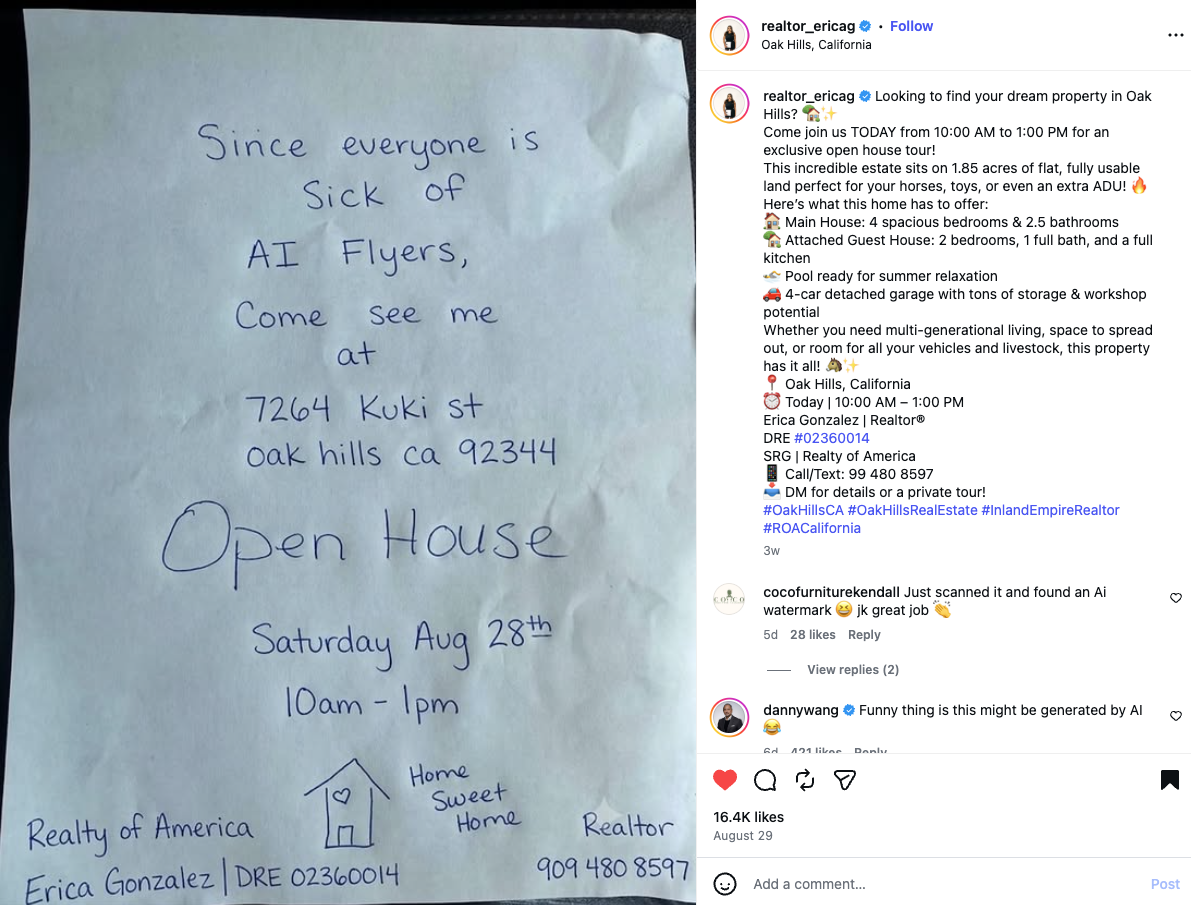
Real estate marketing has never had more tools for making everything look perfect. That may be exactly why Realtor Erica Gonzalez got more than 16,000 likes for a flyer written on wrinkled printer paper. Her open house post looks deliberately thrown together: blue pen, handwritten, hand-drawn house, and a message acknowledging that everyone is “sick of AI flyers.” In a feed increasingly filled with polished graphics and AI-generated imagery, the lack of polish becomes the reason to look and interact.
The post works because Gonzalez recognizes growing fatigue with AI content and turns it into part of the marketing instead of ignoring it. The joke feels timely, but the execution is just as important. A professionally designed graphic advertising the same open house could easily blend in with hundreds of other real estate posts. Against a feed full of polished graphics, something this simple and imperfect is surprisingly hard to ignore. |
There’s also something useful for agents who feel like good marketing requires expensive software, elaborate templates, or hours spent designing content. Gonzalez essentially strips an open house promotion down to its most basic ingredients: where to go, when to show up, and who is hosting it. The creativity comes from the idea, not the production value. More than 16,000 likes on something you could recreate with a pen and printer paper is a good reminder that production quality and marketing effectiveness aren’t the same.
The broader lesson isn’t that agents should abandon Canva or start handwriting every open house flyer. It’s that polished doesn’t automatically mean interesting. As AI makes professional-looking content faster and easier to produce, intentionally simple, imperfect, or unmistakably human content can become its own form of differentiation. Sometimes the marketing edge isn’t having another tool. It’s knowing when you don’t need one.
|
|
|
|
Data centers are expanding into more communities, which means clients will have questions. Will a nearby facility affect home values? What about noise, traffic, water use, energy costs, or future development? NAR research shows no universal “data center effect” on housing. Impacts can vary by market and even by property, so brokers should make sure agents are prepared to have these conversations without making assumptions.
|
Add data centers to your buyer training, particularly if facilities are already operating or being proposed in your market. Teach agents to evaluate each property, local sales and demand, proximity and visibility, and nearby infrastructure such as transmission lines, substations, and roads. Agents should also know where clients can find reliable information about zoning, proposed developments, utilities, and future land use. The goal isn’t for agents to predict what a data center will do to a home’s value. It’s to help buyers gather enough local information to make their own decision.
Most importantly, make sure your agents have the information and resources they need before a client starts asking the questions. Give them the research, local resources, and talking points to discuss data centers without making assumptions. As these facilities become more common, brokers should ensure agents know what to research, what they can confidently discuss, and when to direct clients to additional resources. What’s working right now: |
- Build a data center resource sheet: Give agents links to local zoning, planning, utility, and development resources they can share with buyers looking for more information.
-
Create brokerage talking points: Develop a simple guide for how agents should respond to common questions about property values, noise, traffic, utilities, and future development without making unsupported claims.
- Bring in a local expert: Invite a local planner, land-use professional, utility representative, or other qualified expert to speak at an office meeting about data center development in your area.
|
|
|
|
📈 More borrowers turn to adjustable-rate mortgages: CNBC says ARMs jumped to 9.8% of mortgage applications as the average 30-year fixed rate climbed above 7%.
🏙️ NYC’s new pied-à-terre tax is creating headaches for co-ops: Homes.com reports co-op corporations must pay the new surcharge upfront and then collect it from affected shareholders, raising concerns about reserve funds and special assessments.
🍷 California wine troubles hit the real estate market: Realtor.com explains that the McManis Family Vineyards is selling 3,500 acres of vineyards and winery property after its Canadian export business plunged amid the US-Canada trade dispute. |
|
|
|
|
Sophia Doyle is a staff writer at The Close and a licensed New Jersey real estate agent with hands-on experience in residential real estate. Sophia brings real-world insight into today’s housing market, combining on-the-ground agent experience with a strong background in communications. She understands the full transaction lifecycle, from lead generation and client relationships to marketing strategy and deal execution. Through her writing, Sophia delivers clear, practical guidance to help agents navigate an evolving industry with confidence and creativity.
|
|
|
|
Advertise in The Close The Close is a TechnologyAdvice business © 2026 TechnologyAdvice, LLC. All rights reserved. TechnologyAdvice, 3343 Perimeter Hill Dr, Suite 215 Nashville, TN 37211, USA |
|
|
|
|