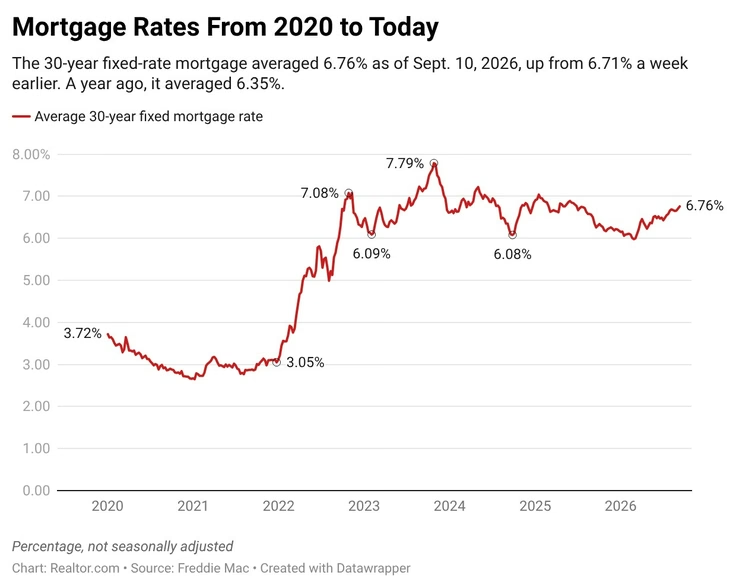
Pumpkin spice is supposed to come back every fall. Seven percent mortgage rates? Not so much. But rates are once again hovering around that threshold, bringing back a familiar buyer question: “Would I be better off waiting?” |
Higher rates may change what an investment costs today, but investors also need to think about what could affect its value tomorrow. In parts of the West, water access is becoming one of those considerations as new Colorado River cuts put more attention on how communities prepare for a drier future. |
|
|
|
Here's what you need to know today: |
|
|
|
Mortgage rates have climbed back to a level buyers haven’t seen in more than a year. Bankrate’s daily national average for a 30-year fixed mortgage reached 7% on September 15, after rates had dipped below 6% earlier this year. That’s a significant change in affordability, and agents should expect more buyers to ask whether they should simply wait for rates to come back down. Rather than dismissing that concern, this is an opportunity to help buyers look at the entire financial picture, including their monthly payment, home price, available inventory, competition, and how long they realistically plan to own the home.
|
Waiting for a lower rate doesn’t necessarily guarantee a better deal. An analysis from wholesale lender AD Mortgage, reported by Realtor.com, found that buying immediately produced a lower total purchase and financing cost than waiting two years in 61% of the scenarios studied, though waiting worked better in some cases. Lower rates can also bring sidelined buyers back into the market, potentially increasing competition and putting upward pressure on prices. Agents shouldn’t tell clients they need to buy now, but they can help them run both scenarios: What does buying at today’s rate look like versus waiting, and what else could change while they wait?
Agents should also be prepared to discuss ways buyers can potentially lower their borrowing costs. Discount points allow borrowers to pay upfront for a lower mortgage rate, and seller concessions may sometimes be used toward that cost. But a buydown isn’t automatically a good deal. Buyers need to calculate how long it will take for the monthly savings to recoup the upfront expense, and they should consider whether they might refinance before reaching that break-even point. This is where working closely with a trusted lender can help agents shift the conversation from “7% is too high” to what makes financial sense for that individual buyer.
What this means for agents: 💬 Be ready for the “I’m waiting for rates to drop” objection: Help buyers look beyond the headline rate and understand how prices, competition, and inventory could also change while they wait.
🧮 Help buyers compare scenarios: Encourage clients to work with their lender to compare buying now versus waiting, including monthly payments, points, concessions, and break-even periods. 🏦 Strengthen your lender relationships: Have a trusted lender who can quickly explain financing options and run the numbers when buyers have questions about affordability. |
|
|
|
Do you use TikTok for your real estate business? |
|
|
|
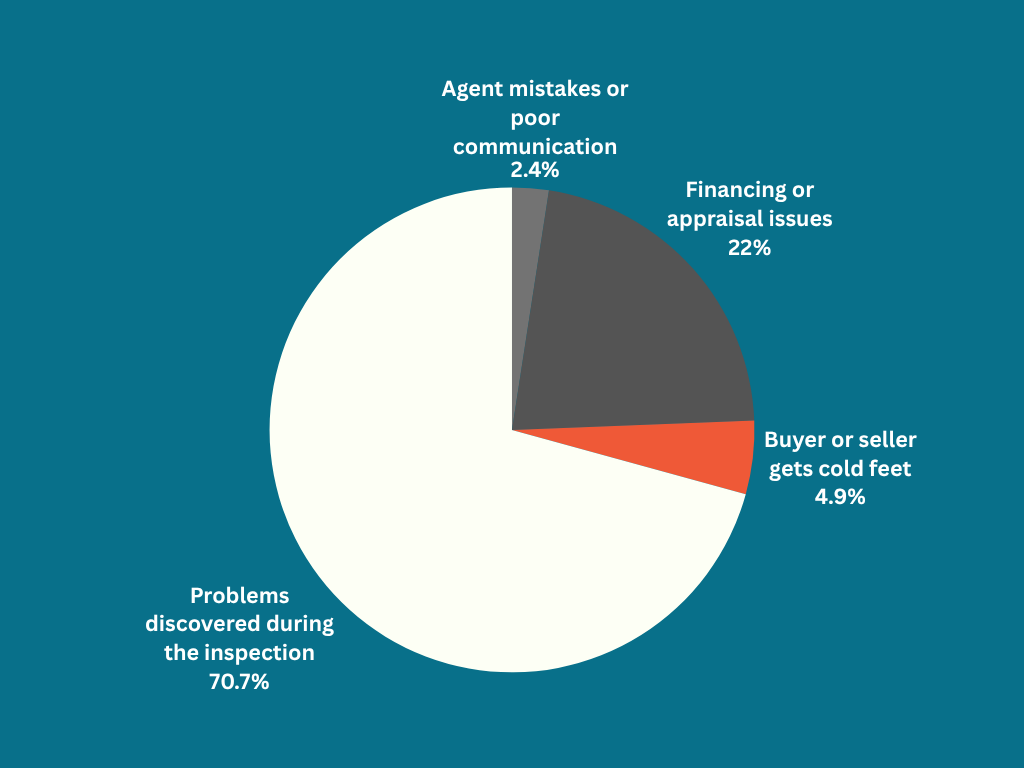
In your experience, what is the most common reason a real estate deal falls through? |
|
|
|
Water access may need to become a bigger part of the due diligence investors do before purchasing property in the West. Under a new federal framework, Arizona, Nevada, and California face significant reductions in Colorado River water allocations beginning in 2027 as drought conditions continue. That doesn’t mean places like Phoenix or Las Vegas are suddenly running out of water, and both cities have spent years preparing for shortages. But it does mean investors should pay closer attention to how individual communities source, conserve, and plan for water.
|
For investors buying existing properties, the bigger concern may be how water scarcity affects a market's economics over time. Reduced supplies can drive higher water rates and make future growth more expensive, while areas with secure, diversified water sources could become increasingly attractive. The impact can also vary considerably within the same state. An Arizona investment, for example, shouldn’t be evaluated solely on statewide or Phoenix-area population growth. Investors should understand the specific municipality, its water provider, where the water comes from, and how prepared the community is for further shortages.
I wouldn’t necessarily avoid investing in Colorado River states because of these cuts, but I would add water security to the same due-diligence checklist as insurance, taxes, and climate risk. Communities investing in water reuse, conservation, diversified supplies, and long-term planning may be positioned for continued growth. Investors should also consider the opposite scenario: if water becomes more expensive or limits how quickly an area can grow, does the investment still make sense? In increasingly water-constrained parts of the West, access to a reliable supply could become part of what separates a resilient property market from a riskier one.
What investors are prioritizing now: |
- Water sources: Investors should understand whether a community relies heavily on the Colorado River or has more diversified supplies.
- Future utility costs: Scarcity can eventually translate into higher water rates, affecting both landlords and tenants.
-
Property-level risk: Two investments in the same state can have very different water outlooks depending on the municipality and local water provider.
|
Your Move This Week: 💧 Research your target market’s water sources. ♻️ Review local conservation plans.
🧮 Add water costs to your stress test. |
|
|
|
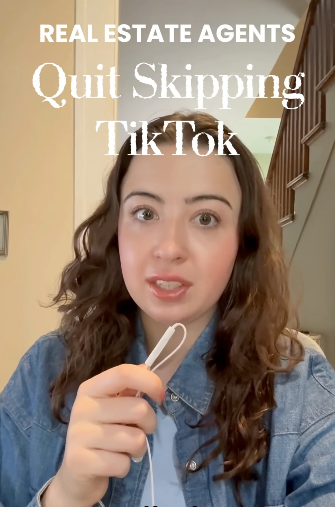
Your next client might not Google “real estate agent near me.” They might open TikTok instead. That’s the idea behind a recent video I filmed for The Close’s Instagram, where I talked about the gap between how many younger consumers use TikTok and how few real estate agents are using the platform professionally. Only about 16% of Realtors use TikTok for business, while 63% of adults under 30 use the platform.
That doesn’t mean agents need to learn dances or chase every viral trend. The bigger opportunity is creating videos around the questions potential clients are already asking. Think “What does $500k buy in Nashville?” or “How much cash do I actually need to buy my first home?” These topics may not generate millions of views, but they can put an agent in front of someone actively researching a market or preparing to make a move. |
What makes the strategy even more interesting is that social video can extend beyond the platform where it was originally posted. Google can surface social videos in Search, meaning a useful TikTok can reach someone searching for that information outside of TikTok too. Suddenly, a video with 800 views can be more valuable than its view count suggests if the right prospective buyer is among them.
The broader marketing lesson is that agents don’t necessarily need a massive audience to make TikTok worthwhile. They need useful, specific content that makes them discoverable when someone has a real estate question they can answer. For agents who have avoided TikTok because they don’t consider themselves content creators or don’t think they’ll go viral, that should change the equation. Specific beats viral. You don’t need to go viral. You need to be searchable. |
|
📲 Scroll Smarter, Agents
|
|
Follow The Close on Instagram for real estate news, market trends, fresh ideas, and the stories agents need to have on their radar.
|
|
|
|
|
|
|
|
Most brokerages’ social media accounts are still just a stream of just-listed graphics, closings, and market updates. That proves business is happening, but it doesn’t show what it actually feels like to work with your brokerage or be part of it. I recently interviewed Luke Acree, president of Reminder Media, and one piece of advice really stuck with me: real estate social media should feel more like reality TV than a commercial. For brokerages, that means showing the people, conversations, training, client work, community involvement, and everyday moments behind the transactions.
|
This is also something brokers should be teaching agents. Hold social media training sessions and show agents how to create content that is educational, entertaining, and relational instead of purely promotional. Encourage them to document listing prep, inspections, open houses, client questions, neighborhood visits, training days, and the work that happens between contract and closing. The goal isn’t to manufacture drama or overshare. It’s to make the business feel human and give potential clients a reason to know, like, and trust the people behind the brand.
Audit the brokerage’s own account with the same standard. If a prospective agent looked at your Instagram today, would they understand your culture, support, training, and personality? If a buyer or seller found you there, would they see expertise and real people they’d want to work with? Your social media is no longer just a marketing channel. It is a recruiting tool, a trust builder, and a window into the brokerage itself. What’s working right now: |
- Run a social media audit: Review your brokerage account as a prospective client or recruit. If all they see are listings and sold posts, show more of the people and work behind them.
-
Host a social media workshop: Train agents on hooks, Reels, Stories, local content, compliance, and how to turn everyday real estate work into useful content.
-
Show the brokerage behind the scenes: Share office training, team meetings, community events, listing prep, celebrations, and problem-solving so followers can see what your brokerage actually feels like.
|
|
|
|
⚜️ New Orleans housing demand faces demographic headwinds: Homes.com says continued population losses and an aging population are shrinking the pool of younger homebuyers and reshaping housing demand across the metro.
💸 “Junk fees” are adding to homebuying costs: NPR examines how brokerage administrative and transaction fees, sometimes topping $1,000, are increasingly showing up at closing for buyers and sellers.
🏛️ Trump taps a new leader for the FHA: Realtor.com reports Matt Jones has been nominated to lead the agency, bringing mortgage-industry and HUB experience as FHA continues efforts to modernize its programs and reduce regulatory burdens. |
|
|
|
|
Sophia Doyle is a staff writer at The Close and a licensed New Jersey real estate agent with hands-on experience in residential real estate. Sophia brings real-world insight into today’s housing market, combining on-the-ground agent experience with a strong background in communications. She understands the full transaction lifecycle, from lead generation and client relationships to marketing strategy and deal execution. Through her writing, Sophia delivers clear, practical guidance to help agents navigate an evolving industry with confidence and creativity.
|
|
|
|
Advertise in The Close The Close is a TechnologyAdvice business © 2026 TechnologyAdvice, LLC. All rights reserved. TechnologyAdvice, 3343 Perimeter Hill Dr, Suite 215 Nashville, TN 37211, USA |
|
|
|
|