Buyers have the upper hand. Well…some buyers do. The housing market has swung further in their favor than at any point in more than a decade, but the national headline comes with a pretty big asterisk. Where you live can completely change who actually holds the negotiating power. |
And knowing your local market isn’t the only way to stay connected to your community. Brokerages can build relationships beyond the transaction by making giving back part of their culture, turning something many agents already care about into an effort the whole office can get behind. |
|
|
|
Here's what you need to know today: |
|
|
|
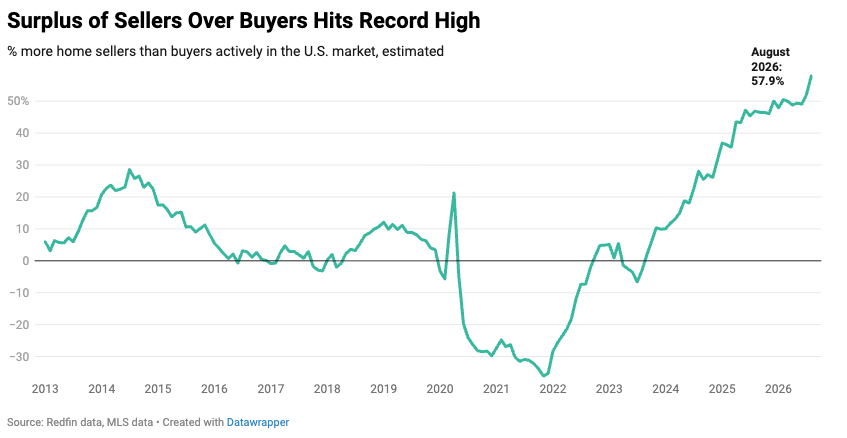
Buyers have more leverage than at any point in Redfin’s records dating back to 2013. In August, there were an estimated 58% more sellers than buyers, as listings climbed and buyer demand barely moved. But that negotiating power comes with a catch: high housing costs are one reason so many would-be buyers are sitting on the sidelines. For those who can afford to stay in the market, however, more inventory and fewer competing buyers can mean more opportunities to negotiate on price, repairs, closing costs, and other terms.
|
The shift is especially pronounced in the Sun Belt, which accounts for all 10 of the strongest buyer’s markets, led by Nashville, Miami, and Houston. New construction has added supply in many of these markets, while affordability has weakened demand. Sellers now have to compete harder for a smaller pool of buyers. More than one in five listings nationally has had a price cut, making realistic pricing and strong presentation increasingly important. Meanwhile, buyers may have the luxury of taking more time, comparing options, and asking for concessions.
There are still a few exceptions. Only five major metros qualified as seller’s markets in August: Nassau County, NY; Newark, NJ; Montgomery County, PA; Milwaukee, WI; and San Francisco, CA. And even in buyer-friendly markets, desirable homes priced correctly can still attract competition. But nationally, the balance has shifted decisively: sellers are increasingly competing for buyers, not buyers competing for homes. 💡Agent Tip: With more homes to choose from, buyers can afford to be pickier. Use a CRM, I recommend Pipedrive, to track each client’s must-haves, deal-breakers, and showing feedback so you can quickly match them with the right listings. What this means for the market: 💰 Sellers need to earn buyer attention: Pricing, condition, presentation, and willingness to negotiate matter more when buyers have alternatives. ⚡ The balance could change if affordability improves: Much of today’s buyer advantage comes from weak demand. If mortgage rates fall enough to bring sidelined buyers back, competition could pick up quickly.
📉 A buyer’s market doesn’t guarantee falling prices: Many owners have substantial equity and little pressure to sell, which could limit how far prices adjust. |
|
|
|
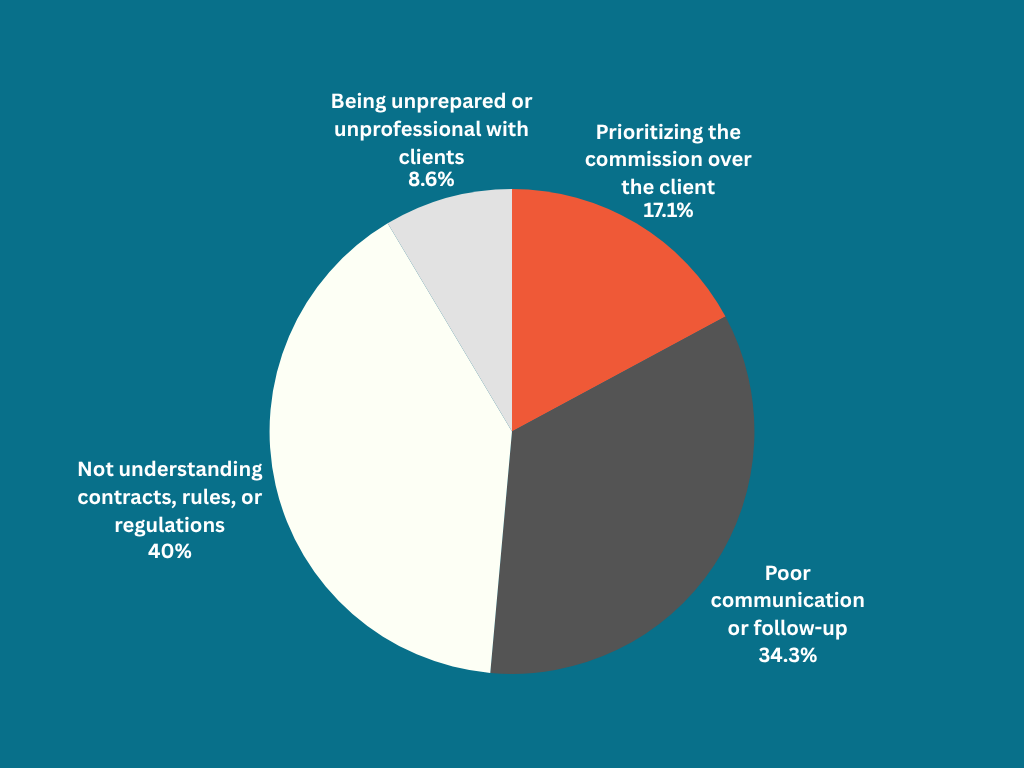
In your experience, what is the most common reason a real estate deal falls through? |
|
|
|
What mistake do you see other real estate agents make most often? |
|
|
|
Beach towns have already carried an investment premium, but several coastal markets are being singled out as places where prices could continue climbing. The list stretches from Rockport, Texas, and Myrtle Beach to Cape May, New Jersey, and San Diego, California. What caught my attention isn’t necessarily the prediction that prices will “skyrocket,” but what these markets share: strong lifestyle appeal, tourism, limited desirable coastal land, and, in several cases, improving infrastructure or growing year-round demand.
|
San Diego provides a great example of both opportunity and the trade-off for investors. Inventory in San Diego County recently fell 5.6%, more than a third of homes sold above asking, and the typical property spent just 28 days on the market. Those are strong demand signals, but investors are buying into a market where the median sale price is already around $990,000. That means the question isn’t simply whether San Diego prices can rise further. Investors need to decide whether the potential appreciation and rental demand justify the high entry price, insurance costs, taxes, and other expenses that come with owning coastal California real estate.
I’d apply that same test to every market on this list. Many benefit from tourism and a desirable lifestyle, but some also have characteristics that can support demand beyond vacation season, including infrastructure investment, remote workers, retirees, and growing local economies. Investors should look for the places where limited supply and strong demand overlap with a purchase price and carrying costs that still make sense. And given the coastal locations, I’d pay particular attention to flood, hurricane, wildfire, and insurance exposure before assuming future appreciation will make an investment worthwhile.
What investors are prioritizing now: |
- Scarcity: Desirable coastal land is limited, which can help support values when buyer demand remains strong.
- Demand beyond tourism: Markets attracting full-time residents, retirees, remote workers, or second-home buyers may be less dependent on one vacation season.
-
Infrastructure investment: Improving roads, public spaces, businesses, and amenities can make a market more attractive to both visitors and residents.
|
Your Move This Week: 🌊 Compare coastal markets. 🛡️ Price insurance. 📊 Separate tourism from year-round demand. |
|
📲 Your Feed Could Use More Real Estate
Come for the memes, stay for the real estate news, trends, and
content agents actually need to see.
Follow The Close on Instagram
so you don’t miss what we’re talking about next.
|
|
|
|
|
|
Here’s an idea you can borrow, tweak, and use this week.
Take 30 minutes this week to roleplay with another agent, coworker, or friend. Practice your buyer consultation, open house introduction, listing presentation, or how you handle common objections. The goal isn’t to memorize every word, but to get comfortable with what you want to say so that it sounds natural when you’re actually talking to a client. Not sure where to start? Here’s a script for touching base with your sphere to practice this week: |
|
Agent:
Hi, [Contact Name]! This is [Your Name], affiliated with [Your Company].
How are you today? Do you have a minute to chat?
Contact:
Yes, I’m doing well, thanks. Sure, what’s up?
Agent:
Thank you, [Contact Name]. The reason for my call is to ask a small
favor. As you might know, referrals from satisfied clients are
incredibly important to my business. I was hoping you might feel
comfortable recommending me to anyone you know who might need help
buying or selling a home. Could you think of someone right now,
perhaps a coworker, friend, or family member, who might be looking
to make a move?
If “Yes”
Agent:
That’s wonderful! Would you mind if I contacted them directly?
Could you share their contact details?
(Get information.)
If “No”
Agent:
That’s completely fine! I really appreciate you considering it.
Moving forward, I understand this won’t always be top of mind.
Would it be alright if I checked in with you every few months,
just to touch base? No pressure at all, I promise.
After either spiel
Agent:
Thank you so much, [Contact Name]. Your support is genuinely
appreciated. Remember, if there’s ever anything I can do for you,
your family, or your friends in terms of real estate, don’t
hesitate to reach out. I look forward to possibly catching up in
a few months, or sooner if you think of someone who could use my
services.
|
|
|
|
|
|
Giving back can be more than something individual agents do on their own. It can become part of what your brokerage is known for. According to NAR’s latest CARE Report, 64% of REALTORS volunteer monthly, and 80% say community involvement is an important part of their business plan. Brokers can turn that individual interest into something the entire office can do together.
|
Start by finding causes that genuinely matter to your agents and the communities you serve. That could mean organizing a food drive, volunteering at a local school, supporting veterans, helping with a housing initiative, or choosing a local nonprofit for an annual fundraiser. You don’t need a huge budget or elaborate event. Giving agents dedicated opportunities to participate can make community involvement easier while bringing the brokerage together around something beyond transactions.
Most importantly, make it consistent. Instead of organizing one volunteer day and moving on, consider adding quarterly service projects, an annual fundraiser, or paid volunteer time to your brokerage calendar. You can even let agents nominate and vote on causes to support. When giving back becomes part of the brokerage’s routine, it can strengthen relationships among agents, deepen connections to the community, and create a culture people are proud to be a part of.
What’s working right now: |
- Pick a quarterly cause: Choose one local organization or project each quarter and give the whole brokerage an opportunity to participate.
-
Let agents choose: Ask agents to nominate local causes they care about, then vote on where the brokerage will volunteer or donate.
- Give agents volunteer time: Set aside a designated day or several hours when agents and staff can step away from work and volunteer together.
|
|
|
|
🤖 Robots are speeding up home construction: CNBC explores how robotic layout, factory automation and prefabrication are helping builders cut construction times and mistakes, though the technology is still far from solving the housing shortage.
🚪 Nearly $1 billion in deals, and he still knocks on doors: Business Insider profiles 30-year-old brokerage founder Jordan Karp, who credits relentless prospecting, persistence, and a willingness to face rejection for helping build his South Florida business.
🍂 The “best time to buy” is almost here: NAR says the week of Sept. 27 to Oct. 3 could offer buyers a sweet spot of more listings, lower prices, and less competition. |
|
|
|
|
Sophia Doyle is a staff writer at The Close and a licensed New Jersey real estate agent with hands-on experience in residential real estate. Sophia brings real-world insight into today’s housing market, combining on-the-ground agent experience with a strong background in communications. She understands the full transaction lifecycle, from lead generation and client relationships to marketing strategy and deal execution. Through her writing, Sophia delivers clear, practical guidance to help agents navigate an evolving industry with confidence and creativity.
|
|
|
|
Advertise in The Close The Close is a TechnologyAdvice business © 2026 TechnologyAdvice, LLC. All rights reserved. TechnologyAdvice, 3343 Perimeter Hill Dr, Suite 215 Nashville, TN 37211, USA |
|
|
|
|