Buying a Labubu blind box means accepting that you won’t know what you’re getting until you open it. Buying a foreclosure at auction isn’t all that different. The only difference is that the surprise could cost thousands of dollars rather than just be a duplicate doll. |
While investors can’t always control what they’ll find behind a foreclosure’s front door, agents have far more control over the biggest drivers of long-term success: the relationships they build long after a transaction closes. |
|
|
|
Here's what you need to know today: |
|
|
|
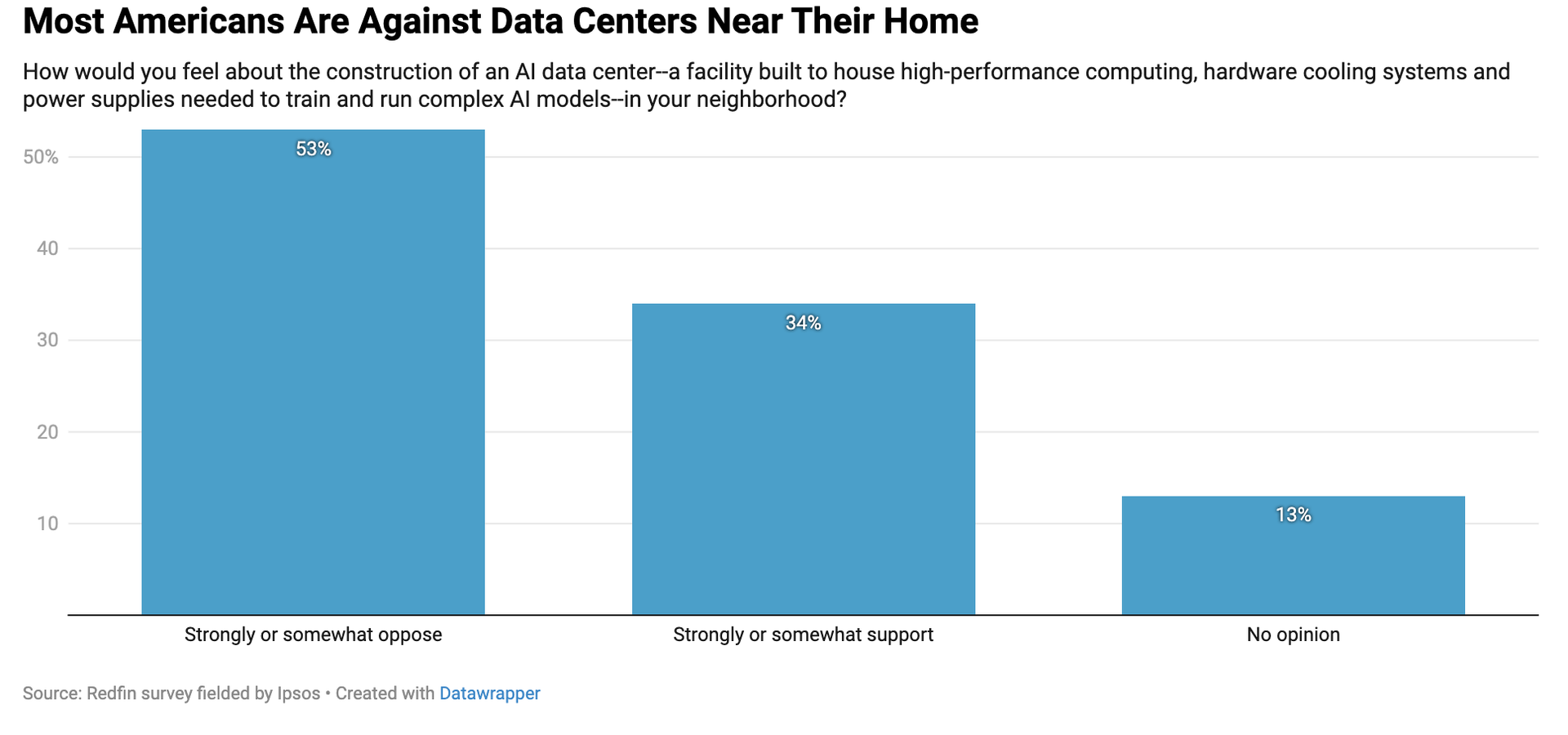
Artificial intelligence (AI) may be advancing at record speed, but many communities are becoming less enthusiastic about the infrastructure needed to support it. According to a Redfin survey, 53% of Americans oppose building an AI data center in their neighborhood, making data centers the least popular type of development surveyed. Residents cited concerns ranging from increased electricity and water consumption to noise, traffic, and the impact these large industrial facilities could have on their communities.
|
The opposition is already moving beyond public opinion polls. The Nashville Zoo is fighting a proposed data center planned just yards from animal exhibits, citing concerns over noise, lighting, and potential impacts on endangered species. In Terarkana, Texas, residents have organized petitions and community meetings to oppose a proposed 500-acre data center campus, raising concerns about water usage, noise pollution, and pressure on the local power grid. Similar debates are emerging nationwide as local governments weigh the economic benefits of AI infrastructure against concerns about quality of life.
For real estate professionals, this highlights a broader shift in how buyers evaluate a property. It’s no longer just about the home itself. Buyers are increasingly asking what’s planned nearby, how future development could affect the neighborhood, and whether large infrastructure projects align with the lifestyle they’re looking for. As AI continues expanding, data centers may become another important factor shaping local housing conversations. What this means for agents: 🤖 AI is reshaping the physical housing landscape: The race to build AI infrastructure is creating new conversations around land use, utilities, and neighborhood planning that could influence real estate markets for years to come.
🏗️ Development projects may face longer approval timelines: As community opposition grows, proposed data centers and other large infrastructure projects could encounter more public hearings, legal challenges, and zoning disputes.
🧱 Community character is becoming part of home value: Buyers are placing greater emphasis on what surrounds a property, making nearby commercial and industrial development an increasingly important consideration. |
|
|
|
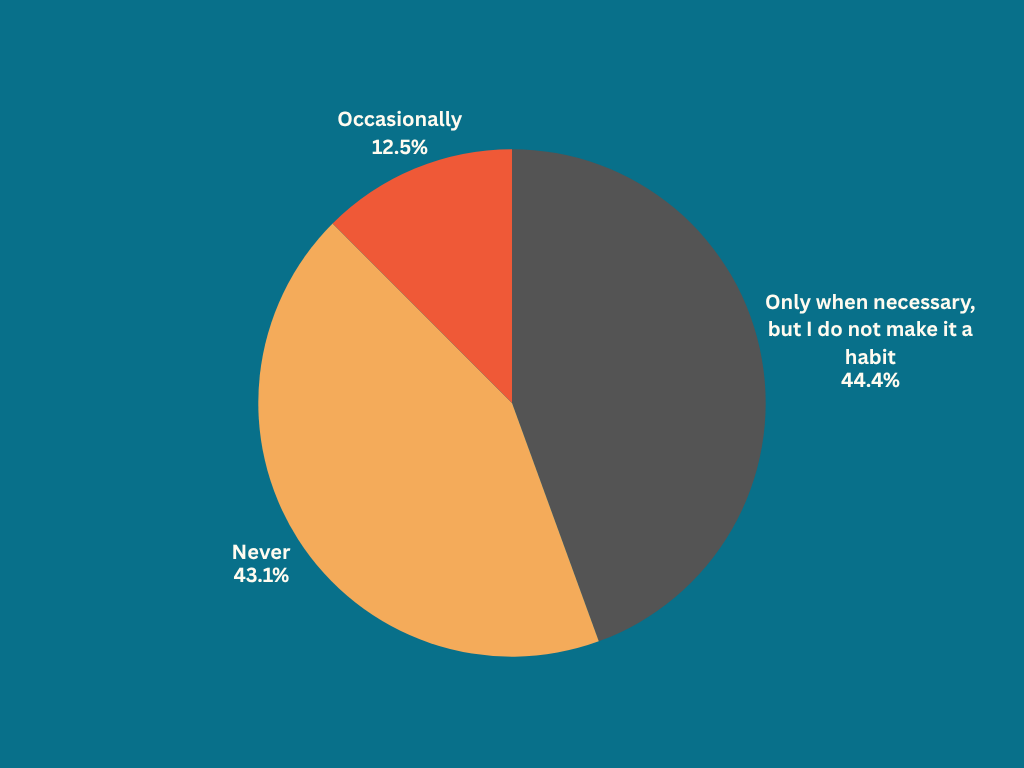
Have you noticed clients leaving your market because of concerns about wildfires, flooding, hurricanes, extreme heat, or other climate risks?
|
|
|
|
How have commission rates changed in your market since buyer representation agreements became mandatory? |
|
|
|
Foreclosure auctions can offer some of the biggest discounts in real estate, but they also come with significant unknowns. This month alone, one Connecticut investor purchased a foreclosed home sight unseen and discovered the skeletal remains of three individuals inside, while a Pennsylvania couple discovered that the dream home they purchased through auction was infested with hundreds of snakes. While both situations are exceptionally rare, they highlight the reality that you don’t know exactly what you’re buying at an auction until you get the keys.
|
I’ve experienced this on a much smaller scale. In my real estate career, I worked with an investor who purchased a foreclosure sight unseen. Once he gained access, the home was packed with junk, had significant water damage, mold, and ultimately required a complete gut renovation. By the time the work was finished, the project cost more than the property could realistically sell for. That same investor had also purchased other properties at auction with great success. Auctions can be a great opportunity to purchase a property at a discount, but it's imperative to understand that every auction property carries risk.
Foreclosure investing isn’t about chasing the biggest discount; it’s about pricing uncertainty. Experienced investors build larger repair contingencies, research title history, estimate carrying costs, and assume they’ll uncover problems they couldn’t see before bidding. The investors who consistently succeed at auctions aren’t the ones who win the lowest-priced properties. They’re the ones who prepare for the surprises hidden behind the front door.
What investors are prioritizing now: |
- Hidden risk assessment: Investors assume every sight-unseen property has unknown issues and underwrite accordingly.
- Due diligence beyond the property: Investors are researching title history, liens, vacancy timelines, and neighborhood conditions before placing a bid.
-
Disciplined bidding: Successful auction buyers stick to predetermined maximum bids rather than getting caught up in competitive bidding.
|
🔍 Review your foreclosure due diligence checklist. ➕ Add a larger contingency to your renovation budget. 🏠 Identify homes that will soon be auctioned in your target market.
|
|
|
|
If you think the secret to growing your business is buying more leads, this webinar may have changed your mind.
During The Close’s latest webinar, Stop Chasing Leads, Start Getting Referrals, Luke Acree, president of Reminder Media, discussed one of the biggest misconceptions in real estate marketing: that more leads automatically means more business. Instead, Luke argued that the greatest opportunity for the most agents is already sitting in their database. Through his FIT Framework (Frequency, Impact, and Trust), he explained how consistent meaningful communication keeps agents top of mind, and ultimately creates a referral business that depends less on chasing strangers and more on nurturing existing relationships.
|
One theme surfaced throughout the conversation: relationships rarely disappear overnight. They fade because agents unintentionally stop showing up. Whether it’s a quick check-in call, a neighborhood update, a client appreciation event, or simply remembering personal details from previous conversations, every touchpoint is another opportunity to strengthen trust. The discussion also challenged the idea that marketing is about broadcasting messages. Instead, the best marketing starts conversations, gives people a reason to engage, and makes it easy for past clients to remember exactly who to recommend when real estate comes up. Three takeaways worth stealing:
🥇 Become impossible to forget: If your database only hears from you once or twice a year, someone else has plenty of time to become the agent they remember. Consistent outreach across multiple channels often beats constantly searching for new leads.
🍦 Turn one event into ten touchpoints: A client appreciation event isn’t just a single afternoon. It’s invitations, reminder emails, phone calls, social posts, photos, thank-you messages, and review requests. One well-executed event can create months of meaningful engagement.
🎯 Don’t just earn referrals. Ask for them: One of the simplest ideas from the webinar was also one of the most powerful. Share your business goals with clients and invite them to be part of your success. Giving people a reason to refer you makes the ask feel natural instead of awkward. |
|
|
|
Short sales may still represent a small share of the market, but they’re becoming more common, and brokerages should be preparing agents now, not after the first one lands on their desk.
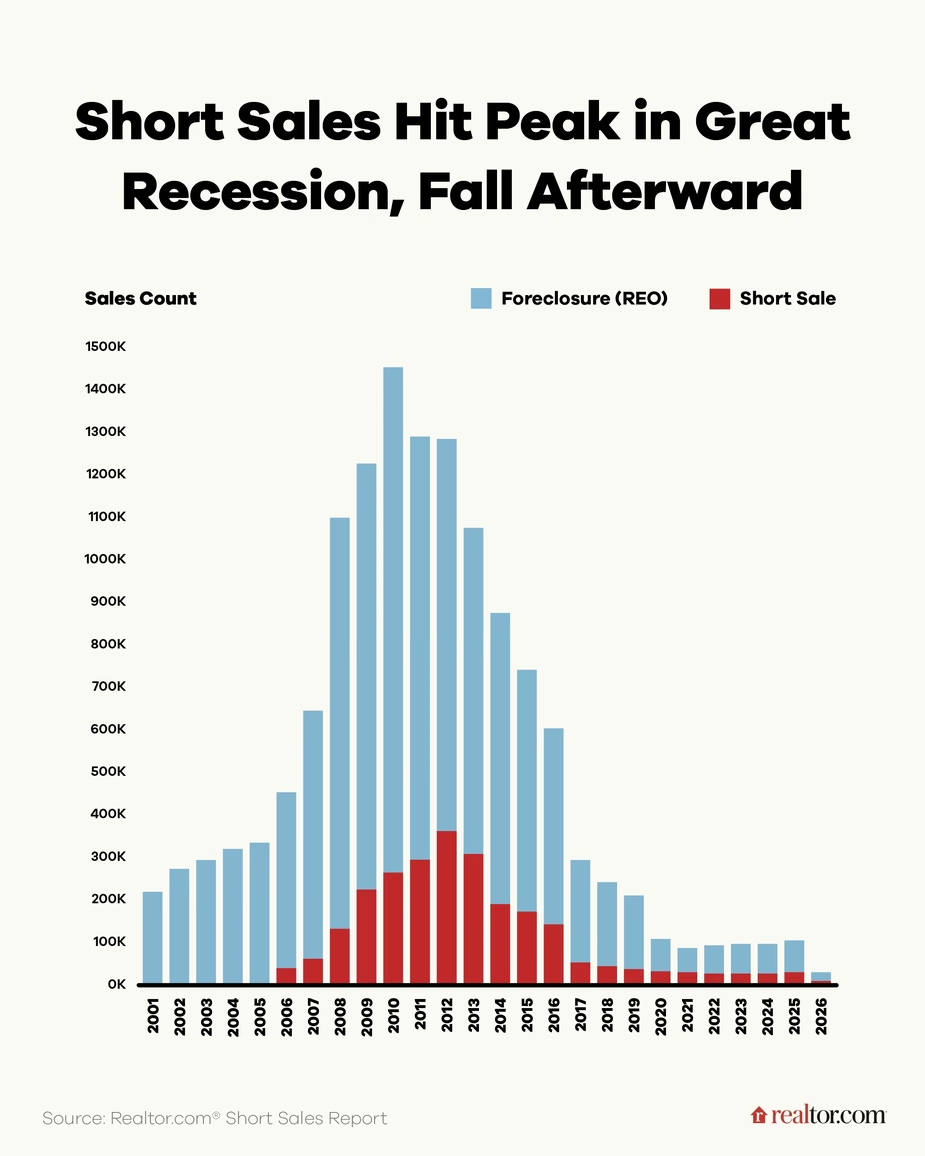
A short sale occurs when a financially distressed homeowner sells their home for less than the amount owed on the mortgage, with the lender agreeing to accept less than the remaining balance rather than pursue foreclosure. According to Realtor.com, short-sale transactions increased 10% from 2024 to 2025 and were up another 16% in the first quarter of 2026. While they still account for less than 1% of conventional home sales, the increase is a reminder that more homeowners may need guidance through these complex transactions.
|
As an agent, I know short sales can be some of the most challenging transactions you’ll encounter, whether you’re representing the seller or the buyer. Every lender has different requirements; approvals can take months; paperwork is extensive; and timelines are far less predictable than in a traditional sale. Without proper training, agents can easily become overwhelmed, make costly mistakes, or avoid short-sale opportunities altogether, leaving clients without the guidance they need.
Brokerages don’t need every agent to become a short-sale expert overnight, but they should make sure every agent understands the basics. Teach agents how the process works, when a homeowner may be a candidate for a short sale, what documentation lenders typically require, and how to set realistic expectations with buyers and sellers. The agents who know how to navigate these transactions won’t just save more deals. They’ll be prepared to serve clients in a changing market where distressed sales may become increasingly common.
What’s working right now: |
- Educate, don’t scare: Teach agents how to explain short sales as one possible solution for distressed homeowners, not just a last resort.
-
Host a short sale boot camp: Walk agents through the short-sale process, lender approvals, required documentation, and common roadblocks before they encounter their first transaction.
- Identify at-risk homeowners early: Train agents to recognize signs that a homeowner may benefit from discussing options before foreclosure becomes the only path.
|
|
|
|
💸 A free house can become an expensive responsibility: Moneywise examines how inherited homes often come with significant carrying costs, making proactive estate planning essential for families.
🏛️ Congress is scrutinizing private listings: Realtor.com reports that lawmakers are investigating Compass’ partnership with MRED over concerns the agreement could reduce market transparency and limit competition.
🔥 Wildfires aren’t driving everyone away: Redfin finds that while several rural Northern California markets are losing population as insurance costs, limited jobs, and wildfire concerns outweigh affordability, many fire-prone counties are still gaining residents. |
|
| |
|
Sophia Doyle is a staff writer at The Close and a licensed New Jersey real estate agent with hands-on experience in residential real estate. Sophia brings real-world insight into today’s housing market, combining on-the-ground agent experience with a strong background in communications. She understands the full transaction lifecycle, from lead generation and client relationships to marketing strategy and deal execution. Through her writing, Sophia delivers clear, practical guidance to help agents navigate an evolving industry with confidence and creativity.
|
|
|
|
Advertise in The Close The Close is a TechnologyAdvice business © 2026 TechnologyAdvice, LLC. All rights reserved. TechnologyAdvice, 3343 Perimeter Hill Dr, Suite 215 Nashville, TN 37211, USA |
|
|
|
|