Be careful what you wish for. Lower mortgage rates sit near the top of many buyers’ wish lists right now. But like the classic Monkey’s Paw story, getting exactly what you asked for could come with an unintended consequence: a flood of buyers rushing back into the market at the same time. |
As it turns out, buyers aren’t the only ones dealing with unintended consequences. Investors are finding that some of the hottest markets of the past few years may come with risks that weren’t obvious during the boom. |
|
|
|
Here's what you need to know today: |
|
|
|
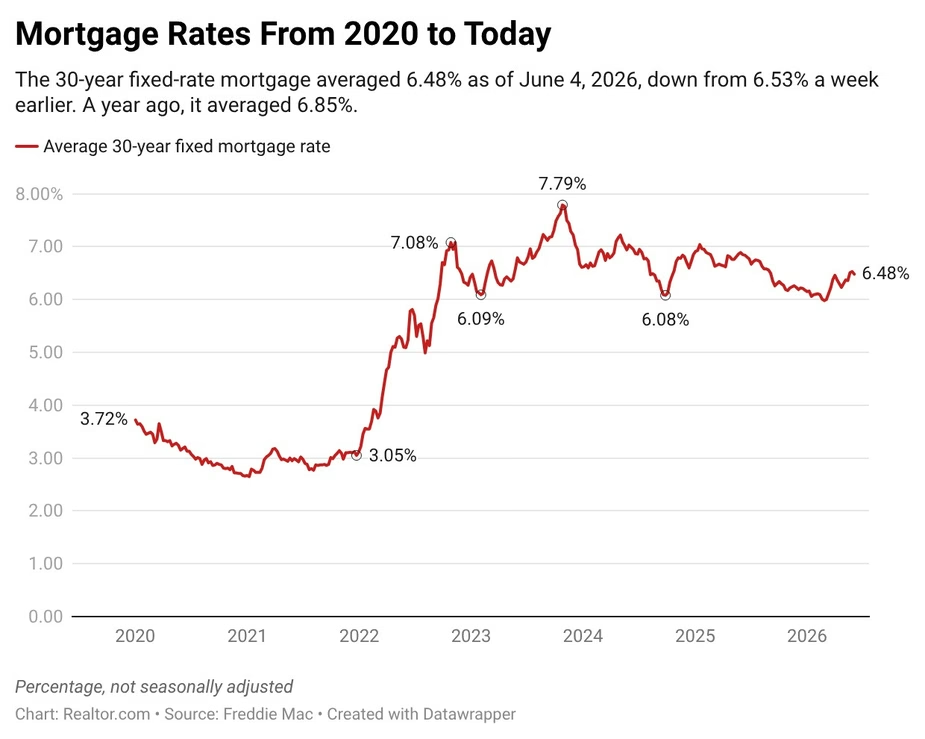
After briefly climbing to a nine-month high of 6.53%, the average 30-year fixed mortgage rate has eased to 6.48%. While many buyers are still waiting for a return to pandemic-era rates, the reality is that mortgage rates in the mid-6% range may be here to stay. Historically, that's not unusual. Rates spent much of the 1990s and early 2000s between 6% and 8%. The challenge today isn’t just rates. It’s rates combined with elevated home prices, rising insurance costs, property taxes, and other affordability pressures.
|
Higher rates have undoubtedly reduced purchasing power. On a $300,000 loan, a buyer paying 6% interest spends roughly $367 more per month than they would at 4%. But there are signs that conditions are slowly improving. Mortgage rates have eased from recent highs; income growth is beginning to outpace home price growth; inventory is at its highest level since 2019; and listing prices have now declined for seven consecutive months. While affordability remains strained, buyers today have more options and more negotiating leverage.
The bigger opportunity may be hiding in plain sight. Many buyers are waiting for rates to fall, but if rates decline significantly, competition is likely to increase as sidelined buyers rush back into the market. Today’s buyers may be able to negotiate seller concessions, secure rate buydowns, or purchase with less competition than they would face in a lower-rate environment. The reality is that there is rarely a perfect time to buy. Successful buyers often focus less on timing the market and more on finding ways to make today’s market work in their favor.
|
What this means for the agents: |
📚 Provide historical perspective: Many buyers view 6% rates as unusually high because they’re comparing them to an abnormal period in mortgage history. Help clients understand where rates have historically been.
💡 Shift the conversation from rate to strategy: Focus on monthly payments, seller concessions, rate buydowns, assumable mortgages, and overall affordability rather than a single interest-rate number. 👀 Help the buyer see the opportunity: Higher rates may reduce purchasing power, but they often increase negotiating leverage. Buyers who understand that tradeoff may be better positioned than those waiting indefinitely for lower rates.
|
|
|
|
Do you use AI in your daily business workflow? |
|
|
|
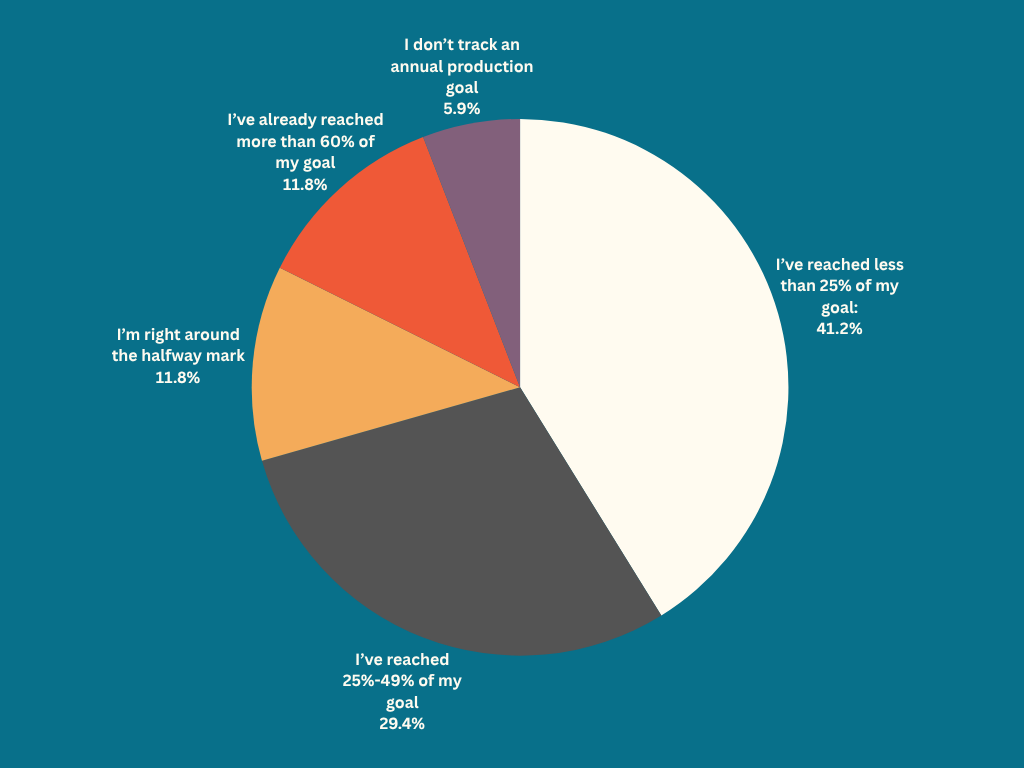
At the halfway point of 2026, how close are you to reaching your annual production goal? |
|
|
|
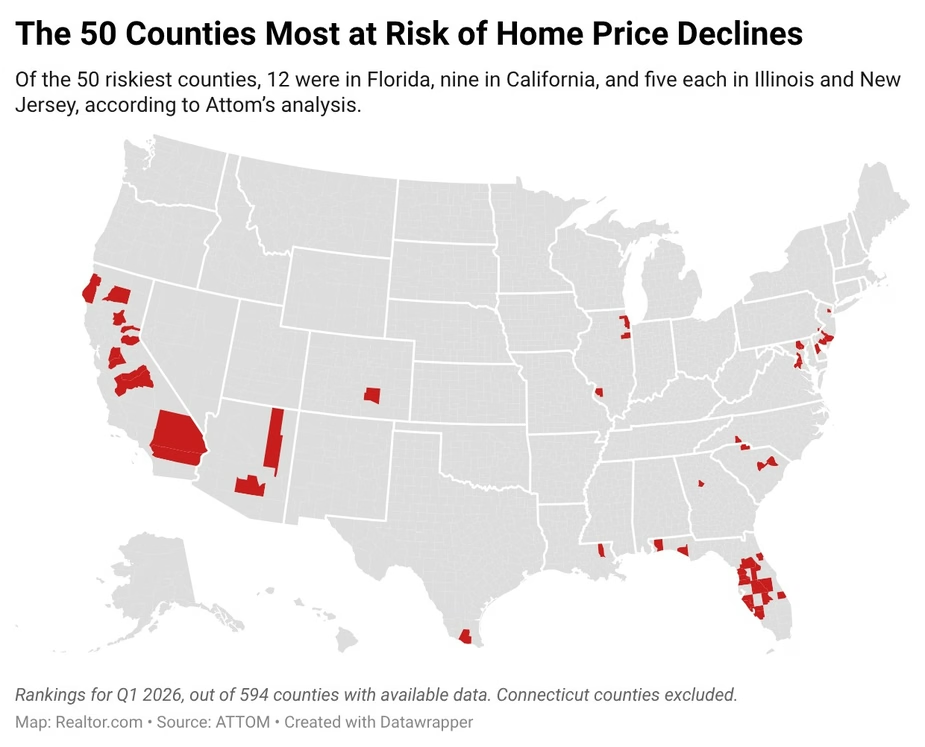
Florida dominated ATTOM’s recent housing risk report, with 12 of the nation's 50 highest-risk housing markets identified as vulnerable to future home price declines. But this isn’t just a Florida story. The report highlights a set of conditions investors should be paying attention to in any market they evaluate. |
The highest-risk markets all tend to share the same characteristics: affordability has become stretched relative to local incomes, foreclosure activity rose in Q1, unemployment remains elevated, and a growing number of homeowners are carrying underwater mortgages. In many cases, these markets experienced rapid price appreciation during the pandemic years, but local wages and economic fundamentals have struggled to keep pace. As affordability pressures build, buyers become more price-sensitive, making future appreciation harder to sustain.
For investors, this is a reminder that market selection matters more than ever. Strong population growth alone is no longer enough. Before purchasing a rental, flip, or development project, investors should evaluate local job growth, foreclosure trends, affordability, and homeowner equity. Markets with low unemployment, healthy equity positions, and stable foreclosure activity are proving far more resilient than those where housing costs have outpaced the local economy. The next phase of investing may be less about chasing hot markets and more about avoiding the ones showing signs of stress.
What investors are prioritizing now: |
- Strong employment fundamentals: Areas with low unemployment and diversified job growth continue to attract investor attention because housing demand is more resilient during economic slowdowns.
-
Foreclosure trends before appreciation trends: Investors are monitoring foreclosure activity as an early indicator of market stress rather than relying solely on past price growth.
- Markets with healthy affordability metrics: Investors are focusing on markets where home prices remain supported by local incomes, reducing the risk of price corrections.
|
🔎 Review foreclosure trends in your target markets. 🚩 Create a market risk checklist for every deal you evaluate. 📍Identify one market with low unemployment and strong affordability metrics. |
|
|
|
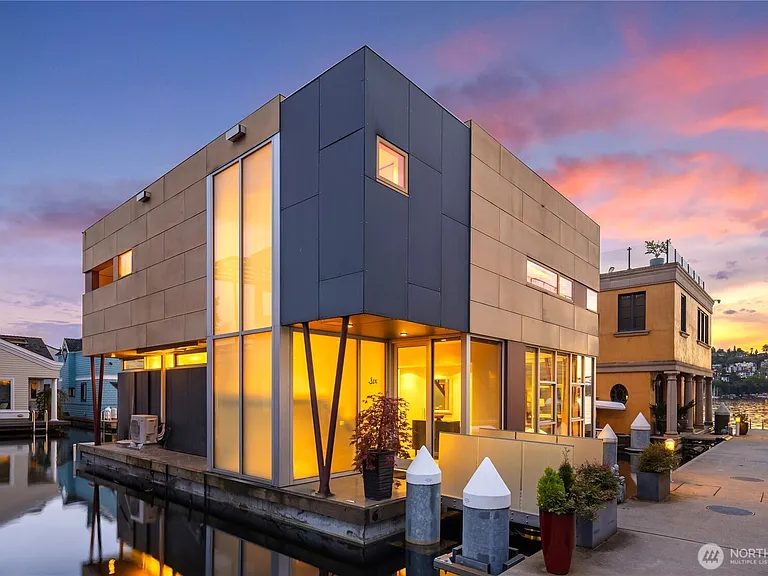
I’ve heard of waterfront living, but this property takes it to another level. Floating directly on Seattle’s Lake Union, this $4.85 million home isn’t simply located near the water; it's on the water. Designed by acclaimed firm Vandeventer + Carlander Architects, the three-bedroom, four-bath residence offers nearly 2,900 square feet of living space with panoramic views of Downtown Seattle.
What makes this home particularly unique is how thoroughly it embraces its floating setting. The floor plan flips traditional design on its head, placing entertaining and living spaces on the upper levels to maximize views and natural light. Expansive glass walls, multiple outdoor decks, and a rooftop terrace create a seamless connection between the home and the lake. Perhaps the most unusual feature is a rare lower-level underwater area complete with true porthole windows, allowing owners to watch life beneath the lake's surface from inside the home.
|
The property highlights a growing luxury trend: buyers increasingly want homes that offer experiences they cannot replicate. In a market filled with waterfront homes, truly unique properties command attention because they’re difficult to compare and even harder to recreate. Floating homes represent an exceptionally limited category of luxury real estate, combining water access, architectural significance, and scarcity in a way that traditional properties often cannot.
Seattle has long been known for its floating home community, but offerings at this level are exceptionally rare. As luxury buyers continue to seek distinctive ownership experiences, homes that blur the lines between architecture, lifestyle, and destination are becoming some of the most memorable properties in their markets. The ultimate waterfront home isn’t next to the water; it’s floating on top of it. |
🌊 Sell the rarity: Truly unique properties create their own category. Floating homes, historic estates, and architecturally significant residences often attract buyers because there are few direct comparables.
🐟 Highlight the conversation piece: Unique spaces like the underwater porthole room create instant memorability. Luxury buyers tour dozens of beautiful homes. They remember the ones with features they’ve never seen before.
📲 Unusual properties are content magnets: Homes with one-of-a-kind features generate engagement, shares, and press coverage. Video tours, drone footage, and social media posts of unique spaces can dramatically expand a listing’s reach. |
|
|
|
For decades, brokerages relied almost entirely on commission income. But as transactions slow and margins tighten, the most successful firms are diversifying revenue streams beyond home sales. Across the industry, brokerages are generating income through property management, mortgage partnerships, preferred vendor programs, relocation services, events, education, and other complementary businesses that create revenue regardless of market conditions.
What’s particularly interesting is that many of these opportunities don’t require building something from scratch. Some brokerages are partnering with lenders, title companies, contractors, landscapers, and other service providers to create referral relationships and strategic partnerships. Others are monetizing the relationships, expertise, and audience they have already built. In some cases, these ancillary businesses now account for more than half of a brokerage’s profit. The common theme is simple: they are capturing value throughout the client’s real estate journey.
Brokers, this is a reminder to evaluate your business through a broader lens. If transactions slow, where else can your brokerage create value and generate revenue? The answer will be different for every firm, but the brokerages that thrive over the next decade will likely be those that diversify intentionally, create multiple income streams, and reduce their dependence on commission income alone. The goal isn’t to do everything. It’s to identify the opportunities that align with your strengths and build a more resilient business.
What’s working right now: |
- Preferred vendor partnerships: Brokerages are creating vetted networks that provide value to clients while generating referral or partnership revenue.
-
Property management divisions: Many firms are adding property management services to create recurring revenue that isn’t dependent on transaction volume.
-
Annual business audits: Top brokers are reviewing every expense, tool, marketing channel, and business line to identify what is truly generating profit and where new revenue opportunities exist.
|
|
|
|
🏀 NBA Finals, housing edition: Homes.com compared the New York and San Antonio housing markets and found San Antonio leading in sales activity, inventory growth, and faster-moving listings, while New York continues to hold stronger pricing power despite weaker demand and slower sales.
📉 New listings take a step back: Redfin finds new home listings fell 1.3% week over week, one of the largest declines of 2026, as elevated mortgage rates, rising housing costs, and economic uncertainty cause some sellers to delay listing their homes.
📊 Housing forecasts get a reset: KCM highlights that economists have revised 2026 housing forecasts as elevated mortgage rates, inflation, and economic uncertainty slowed buyer activity, though experts still expect home prices to rise and sales to outpace last year’s levels. |
|
|
|
|
Sophia Doyle is a staff writer at The Close and a licensed New Jersey real estate agent with hands-on experience in residential real estate. Sophia brings real-world insight into today’s housing market, combining on-the-ground agent experience with a strong background in communications. She understands the full transaction lifecycle, from lead generation and client relationships to marketing strategy and deal execution. Through her writing, Sophia delivers clear, practical guidance to help agents navigate an evolving industry with confidence and creativity.
|
|
|
|
Advertise in The Close The Close is a TechnologyAdvice business © 2026 TechnologyAdvice, LLC. All rights reserved. TechnologyAdvice, 3343 Perimeter Hill Dr., Suite 215, Nashville, TN 37211, USA. |
|
|
|
|