There’s a difference between wanting something and being able to afford it. Most people would love a luxury vacation or a private jet, but eventually the math has to work out. Right now, more buyers are running into that same reality as the cost of homeownership continues to stretch in ways many households simply can’t justify. |
As affordability pressures continue to sideline buyers, brokerages are discovering that income isn’t always the issue; it's a lack of information. Across the country, thousands of homeownership assistance programs exist, yet many buyers still assume ownership is further out of reach than it actually is. |
|
|
|
Here's what you need to know today: |
|
|
|
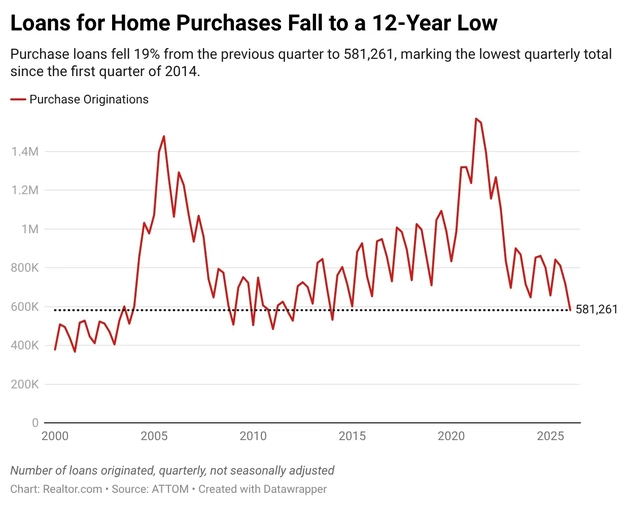
Home purchase lending fell to its lowest level in 12 years during the first quarter of 2026. Just 581,000 home purchase loans were originated between January and March, down 19% from the previous quarter and marking the weakest quarter for purchase lending since early 2014. The slowdown wasn’t limited to home purchases; total residential mortgage originations and purchase-lending volume are also down.
The decline reflects the mounting affordability pressure facing buyers. Mortgage rates remained above 6% throughout the quarter, climbing from roughly 6.16% at the start of the year to 6.46% by early April. With home prices remaining near record highs, many prospective buyers found themselves priced out or unwilling to take on today’s monthly payments. The result was a broad-based slowdown, with purchase activity declining in 99% of the 200 metro areas analyzed.
|
The key takeaway is that this is less about demand and more about affordability. If buyers had disappeared entirely, we would expect inventory to pile up everywhere and prices to fall sharply, but this isn’t the case. Instead, the issue is that purchasing a home has become financially out of reach for a growing share of households.
This trend also helps explain why transaction volume remains subdued despite a relatively resilient economy. Housing has become increasingly dependent on affordability conditions rather than buyer desire. Mortgage rates, insurance premiums, property taxes, HOA fees, and home prices are all competing for a larger share of household budgets. Until one or more of those pressures ease, the market may continue to see significant pent-up demand without a corresponding increase in closed transactions.
|
What this means for the market: |
📉 Low sales don’t mean low demand: In many areas, affordability and inventory, not buyer interest, are driving the slowdown. 🔑 Affordability will determine demand: Even modest improvements in rates or monthly costs could bring a significant number of sidelined buyers back into the market.
⚖️ The market is increasingly rate-sensitive: Even modest shifts in mortgage rates can quickly change buyer behavior. |
|
|
|
What home style is most common in your market? |
|
|
|
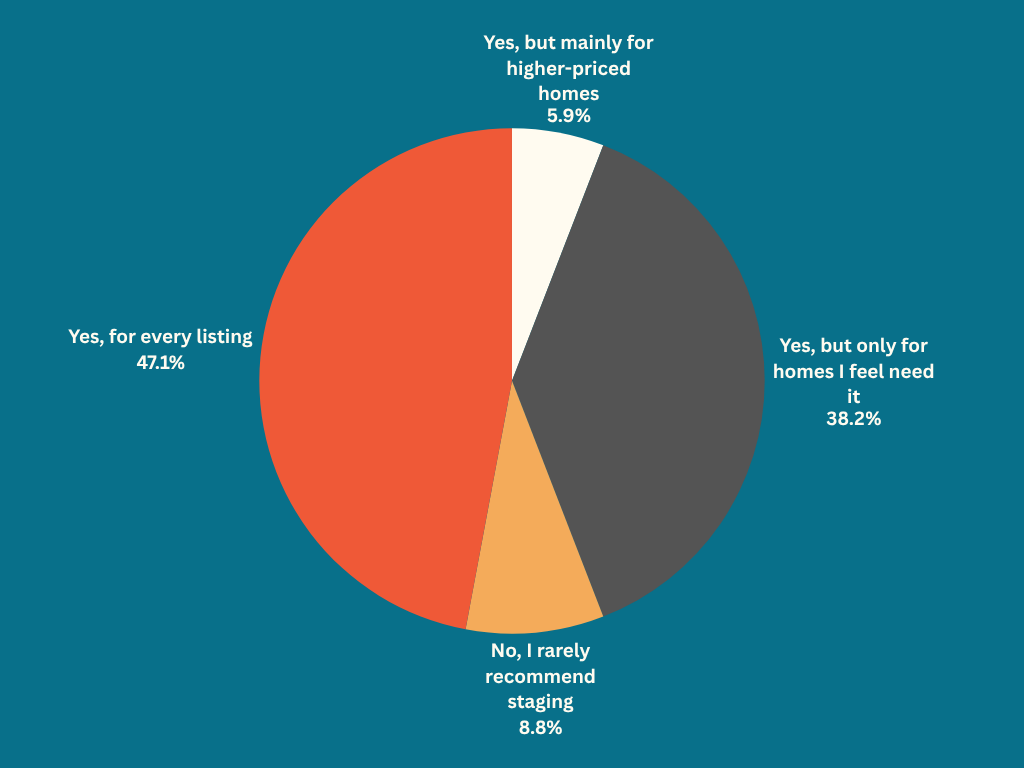
Do you recommend home staging to your sellers before listing? |
|
|
|
For decades, real estate investors have benefited from a market that rewarded ownership alone. Falling interest rates, rising property values, and abundant capital created an environment where appreciation did much of the heavy lifting. Today, that playbook is changing.
Institutional investors are increasingly shifting their focus away from betting on future price growth and toward creating value through operations. Rather than relying on market appreciation, they’re targeting opportunities to increase income, improve efficiency, reposition assets, or unlock additional revenue streams. In other words, returns are being driven by execution, not simply market momentum.
This shift is influencing where capital is flowing. Investors are showing growing interest in specialized sectors such as student housing, manufactured housing, and other operationally intensive property types where hands-on management can create a competitive advantage. The common theme is simple: investors want assets where they have more control over the outcome rather than relying on market conditions to generate returns. The takeaway is that the next phase of real estate investing may reward operators more than speculators. Investors who can increase cash flow, improve property performance, and solve operational challenges could be better positioned than those waiting for appreciation alone to drive returns. In a higher-rate environment, value creation is becoming the new growth strategy. What investors are prioritizing now: |
- Specialized property sectors: Niche asset classes with strong demand drivers are drawing capital because they offer opportunities to outperform through expertise.
- Income growth over appreciation: Investors are focusing on assets with clear opportunities to increase revenue and cash flow.
- Value-add opportunities: Properties that can be improved, repositioned, or operated more efficiently are attracting increased attention.
|
🔎 Evaluate properties based on cash-flow potential, not appreciation forecasts. 📊 Review your portfolio for untapped income opportunities.
🧮 Recalculate returns using flat appreciation assumptions. |
|
|
|
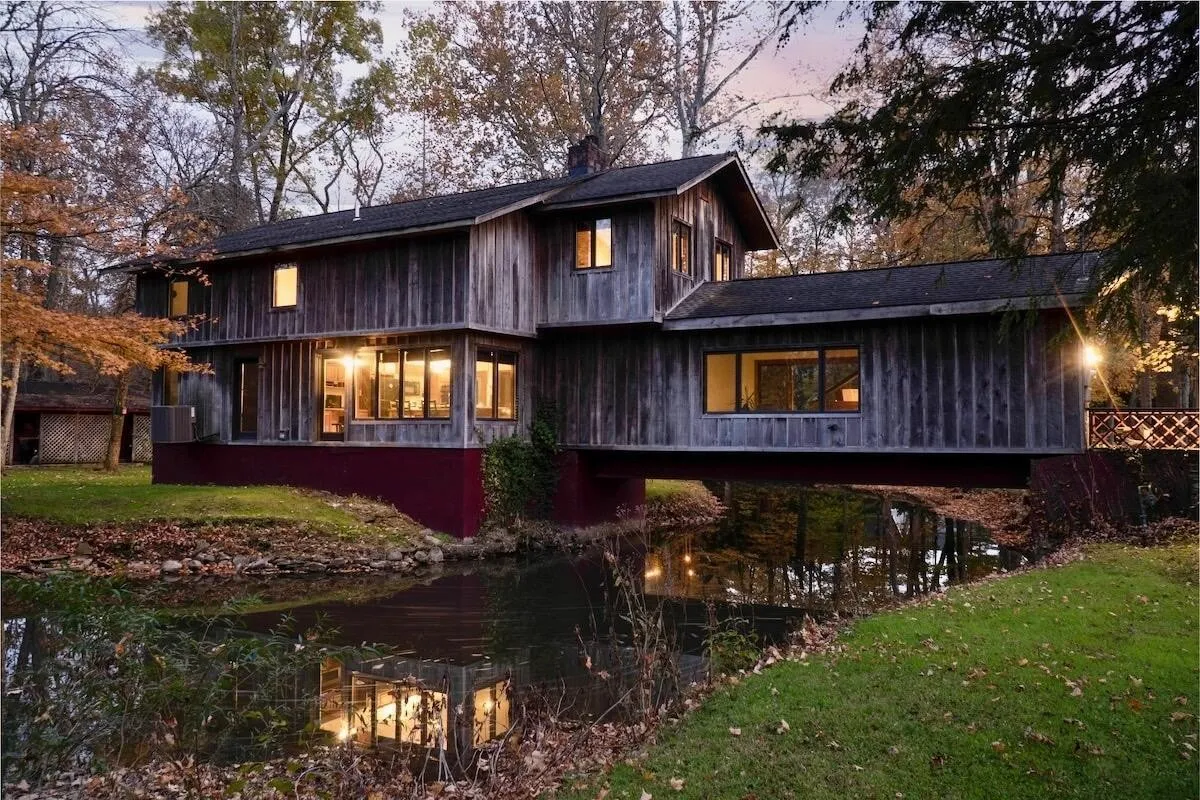
Some homes are unique because of their finishes. Others are unique because of what they once were. This Ohio property began as a simple bridge in the 1950s before being transformed into a private residence spanning directly over the water. And that origin story has become the entire market strategy. The listing doesn’t downplay the home’s unusual nature; it fully embraces it, positioning the property as something buyers may never come across again.
That’s what makes the listing description line: “Opportunities to own a bridge-turned-residence on five private acres are truly once-in-a-lifetime,” so effective. It immediately creates scarcity. Buyers understand they can always find another renovated suburban house, but they may never find another home built from an actual bridge sitting over a creek. The rarity itself becomes part of the value proposition.
|
The listing also leans heavily into the emotional experience of living there. The listing describes the living room suspended over the water, windows framing the flowing creek, private kayaking access, wooded surroundings, and decades of memories created within the structure. Rather than focusing solely on square footage or finishes, the marketing centers around atmosphere, storytelling, and the feeling of living somewhere truly unconventional. In today’s market, where many homes can start to feel interchangeable online, unusual adaptive-reuse properties naturally stand out.
And that’s the bigger lesson for agents. When a property has a story buyers can’t easily forget, lead with it. Scarcity and originality are incredibly powerful marketing tools, especially when they’re authentic. Buyers looking for something different are increasingly drawn to homes with character, history, and a narrative attached. Sometimes the strongest feature a property has isn’t the renovation–it’s the fact that nothing else exists like it. |
🌉 Lead with the origin story: When a home has an unusual transformation or history, make it the centerpiece of the marketing, not a side detail.
📖 Use storytelling to make listings memorable: Properties with a narrative naturally stand out in crowded online marketplaces. 🌲 Sell the atmosphere, not just the spec: Water views, wooded surroundings, and emotional lifestyle moments often resonate more than square footage alone. |
|
|
|
A St. Louis program is once again offering first-time homebuyers up to $50,000 in forgivable down payment assistance, enough in some neighborhoods to cover a significant portion of the purchase price. The program was so popular during the first round that the city has now relaunched it with another $1 million in funding. But the bigger story isn’t what’s happening in St. Louis; it’s what it reveals about today’s buyer market.
Across the country, there are thousands of homeownership assistance programs available. Many are designed specifically for first-time buyers, while others target teachers, nurses, firefighters, military members, law enforcement officers, and other workforce groups. Yet most consumers have no idea these programs exist. They assume they need a large down payment, perfect credit, or years of additional savings before they can buy. |
This creates a massive opportunity for brokerages. Agents who understand the available assistance programs immediately position themselves as trusted advisors rather than salespeople. More importantly, they can often turn a renter into a buyer months or even years sooner than the client expected. In a market where lead generation costs continue to rise, helping an existing prospect discover financing assistance can be far more valuable than purchasing another lead.
Brokers, your agents need to become local experts on homeownership programs. Every market has opportunities that buyers don’t know about. The agents who understand down payment assistance, workforce housing incentives, local grants, and special financing programs will unlock buyers that their competitors overlook. The next transactions may not come from finding a new lead. It may come from helping an existing buyer realize they can afford to buy right now.
What’s working right now: |
- Buyer assistance program education: Brokerages are creating internal databases of local, state, and national homeownership assistance programs that agents can quickly reference.
-
First-time buyer workshops: Teams are hosting educational events focused on financing options, grants, and down payment assistance opportunities.
- Lender partnership programs: Brokerages are partnering with lenders to provide agents with regular updates on available grants and buyer incentives.
|
|
|
|
⚠️ Chemical scare raises housing concerns: Realtor.com examines the potential real estate fallout from Garden Grove’s recent chemical tank emergency, with experts warning that evacuation orders, environmental concerns, and buyer hesitation could create a lasting stigma that weighs on local home values.
🤖 AI enters the agent chat: A New York Times columnist used AI tools instead of a listing agent to sell his home, relying on chatbots for pricing, marketing, negotiations, and buyer communications.
🧑⚖️ Buyer commission settlement advances: The National Association of REALTORS reports a federal judge granted preliminary approval of its proposed $52.25 million settlement in the Tuccori lawsuit, requiring additional practice changes for agents or brokers. |
|
|
|
|
Sophia Doyle is a staff writer at The Close and a licensed New Jersey real estate agent with hands-on experience in residential real estate. Sophia brings real-world insight into today’s housing market, combining on-the-ground agent experience with a strong background in communications. She understands the full transaction lifecycle, from lead generation and client relationships to marketing strategy and deal execution. Through her writing, Sophia delivers clear, practical guidance to help agents navigate an evolving industry with confidence and creativity.
|
|
|
|
Advertise in The Close The Close is a TechnologyAdvice business © 2026 TechnologyAdvice, LLC. All rights reserved. TechnologyAdvice, 3343 Perimeter Hill Dr., Suite 215, Nashville, TN 37211, USA. |
|
|
|
|