The most memorable marketing is not always the most welcome. Baby Shark may drive people crazy, but almost everyone remembers it after hearing it once. And that kind of memorability is exactly what more real estate professionals are trying to create in today’s crowded market. |
Attention-grabbing marketing may help agents stand out, but affordability is still shaping what buyers and homeowners can actually do next. Across parts of the Northeast and Mid-Atlantic, rising insurance premiums are quietly emerging as one of the housing market’s fastest-growing pressures, adding new strain for both buyers and existing homeowners alike. |
|
|
|
Here's what you need to know today: |
|
|
|
$34 for any new members first month (thats $40 off), May 25-29 only. |
|
|
|
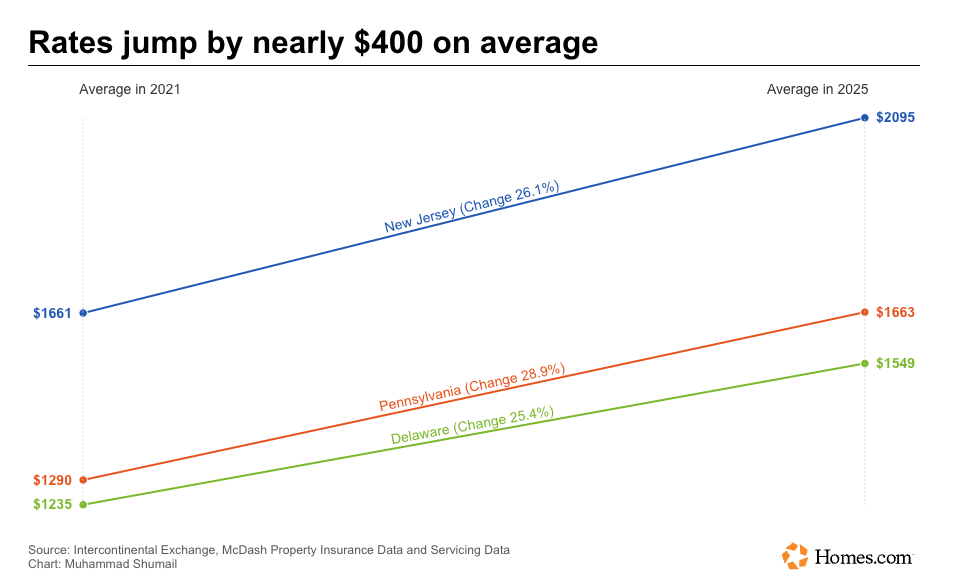
Homeowners' insurance is becoming one of the biggest pressures in the housing market. A new Federal Reserve Bank of Philadelphia study found that homeowners in Delaware, New Jersey, and Pennsylvania have seen insurance premiums jump between 25% and 29% since 2021, even after adjusting for inflation. And researchers warn these increases are likely far from over.
What makes this shift so important is that insurance is no longer an afterthought; it's becoming a major factor in affordability. In some areas, insurance costs are now rising faster than home values themselves. The study also found that higher insurance premiums are directly correlated with increased mortgage delinquency risk, particularly among low-and moderate-income households. Rising insurance costs are beginning to put real financial strain on homeowners, not just buyers. |
Rising insurance costs could have a major ripple effect across the market. As monthly ownership costs continue climbing, some buyers may simply no longer qualify for the homes they could have purchased just a few years ago. Existing homeowners may also begin to reconsider whether staying in certain areas still makes financial sense, especially in regions facing growing climate or disaster risks. Over time, this could influence migration patterns, buyer demand, and even how properties are valued.
As a New Jersey real estate agent, this is particularly notable, as these states have historically not been viewed as major insurance risk markets. Now, climate risk, rebuilding costs, and insurer instability are becoming part of everyday housing conversations, and I fear this trend will eventually affect most of the country as climate-related costs continue to reshape homeownership. |
What this means for the market: |
🏡 Some homeowners may decide to sell: Higher carrying costs could push more owners, particularly those on fixed incomes, to list their homes or relocate. ⚠️ Financial strain may increase: Higher insurance costs are already being linked to rising mortgage delinquency risk, particularly in lower-income communities.
💰 Affordability is getting squeezed further: Rising insurance premiums are increasing the true monthly cost of homeownership, even if home prices stabilize. |
|
|
|
What type of paid real estate lead source do you prefer? |
|
|
|
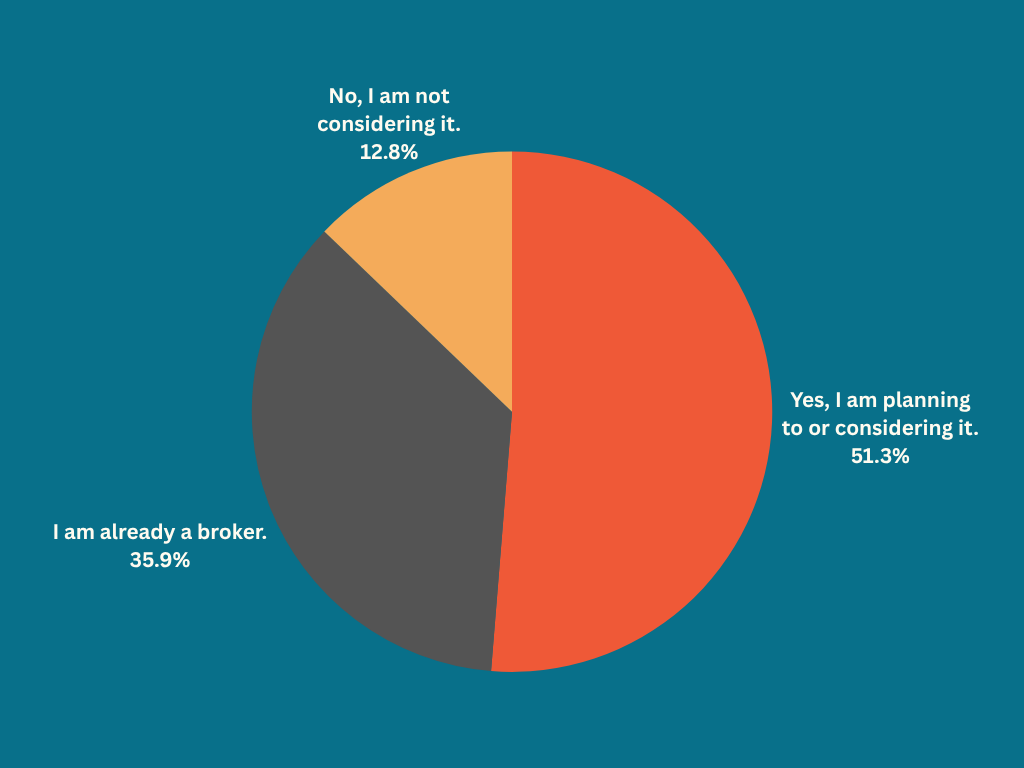
Have you considered getting your broker’s license? |
|
|
|
A major wave of apartment construction is beginning to reshape parts of the rental market, particularly across the Northeast. Multifamily completions in the region surged more than 40% year over year in early 2026, while new apartment starts nearly doubled, creating one of the strongest rental supply expansions in the country.
For investors, this matters because supply directly impacts pricing power. Markets seeing large waves of new apartment inventory can experience slower rent growth, increased concessions, and more competition for tenants in the short term. Cities like Boston and Philadelphia are already seeing asking rents soften as new supply begins entering the market.
At the same time, the opposite dynamic is developing elsewhere. In the Western US, multifamily construction has slowed significantly due to rising costs and weaker rent growth. While that may pressure developers today, it could eventually create tighter inventory conditions and stronger rent support in the future as fewer projects move through the pipeline.
This is why investors can no longer evaluate rental markets based on demand alone. Understanding where new supply is accelerating, slowing, or being absorbed is just as important as population growth or migration trends. The investors who understand construction pipelines early can better position themselves for future pricing power, occupancy stability, and long-term cash flow performance. What investors are prioritizing now: |
- Occupancy stability and tenant competition: Investors are evaluating how incoming inventory could impact leasing performance.
- Long-term rent growth potential: Supply trends are becoming a key factor in forecasting future cash flow.
-
Markets with balanced supply pipelines: Investors are watching where new inventory may pressure rents or create future shortages.
|
🔎 Review competing inventory near your properties 📉 Identify markets with declining construction pipelines 📊 Track multifamily construction activity in your market |
|
|
|
A private ice skating rink with its own Zamboni isn’t something you see every day, but neither is a 253-acre estate designed to function like a personal luxury resort. Domino’s Pizza founder Thomas Monaghan listed his sprawling Michigan compound for $13.56 million, and the property reflects a growing shift in luxury real estate toward fully self-contained lifestyle estates.
|
Located just outside Ann Arbor, the estate includes a nearly 10,000-square-foot Frank Lloyd Wright-inspired main residence, two additional homes, a golf course, riding arena, sports complex, greenhouse, treehouse, baseball fields, tennis courts, and even a private car wash. These amenities go far beyond typical luxury add-ons. A massive recreation building features a full sports court, indoor pool, racquetball court, sauna, hot tub, fitness center, and game room, while the outdoor ice rink pavilion transforms the property into a year-round entertainment destination.
What makes properties like this increasingly attractive is the lifestyle they offer. Luxury buyers are gravitating toward homes that support wellness, recreation, entertaining, privacy, and multigenerational living, all within a single compound. Instead of simply purchasing square footage, high-end buyers are looking for estates that feel immersive and are difficult to replicate. |
This reflects a broader evolution happening across the luxury market. Unique lifestyle amenities, especially sports and recreation-focused features, are becoming major differentiators. In today’s market, the ultimate luxury isn’t just a beautiful home; it’s having everything you could want without ever needing to leave the property. |
⛸️ Sell the lifestyle ecosystem: Luxury buyers are increasingly looking for properties that function as complete experiences, not just homes. Highlight how amenities work together to create an immersive day-to-day lifestyle. 🌳 Land is becoming a luxury amenity: Large acreage near major cities is increasingly rare and valuable. Privacy, flexibility, and room for recreation are major selling points for affluent buyers.
🏡 Position estates as self-contained retreats: Buyers are gravitating toward homes that support entertaining, wellness, family activities, and recreation all in one place. The more a property feels like a private resort, the stronger the emotional appeal. |
|
|
|
An Ontario real estate agent is getting buyers to literally sing listing addresses. Through custom jingles, music videos, and over-the-top property marketing, agent Scottie Henderson has built a recognizable local brand that generates attention, showings, and conversations around his listings. Agents have attested that their clients are calling them while singing the addresses from the viral videos.
While this strategy may seem eccentric, the results are telling. In today’s crowded market, simply posting a listing is no longer enough. Buyers are flooded with content every single day, which means the listings and brokerages that stand out are the ones creating something memorable. Henderson isn’t looking for national virality; instead, he focuses on building local recognition, fostering emotional connections, and driving showings for his listings. |
Brokers, this is where creativity becomes a business strategy. Your brokerage and your agents do not need to start singing jingles, but they do need to start thinking about marketing differently. Whether it’s creative social media videos, community events, storytelling, unique branding, humor, lifestyle marketing, or hyperlocal campaigns, the goal is the same: create something people remember and talk about. Brokerages that encourage creativity rather than cookie-cutter marketing are more likely to dominate local attention.
Henderson leaned into what made him different instead of trying to look like every other agent. That authenticity became part of his brand. Buyers and sellers increasingly want to work with agents who feel human, memorable, and relatable – not interchangeable. Brokerages that help agents develop recognizable personal brands will have a major advantage moving forward. |
What’s working right now: |
- Creative listing videos: Agents are using humor, storytelling, music, and personality-driven content to make listings more memorable.
-
Personality-based branding: Agents are leaning into their unique strengths and interests to create more authentic marketing.
- Multi-format listing launches: Brokerages are combining professional photography and traditional marketing with engaging social-first content.
|
|
|
|
➗ Fractional ownership gains traction in Tahoe: Realtor.com explores how shared-ownership homes are booming near Lake Tahoe as soaring prices push buyers toward lower-cost vacation alternatives, though experts warn resale and rental limitations can be challenging.
💸 Dual agency may cost sellers big: New Zillow research found that homeowners lost a combined $1.49 billion over three years when the same agent represented both buyer and seller, while off-MLS listings cost sellers another $1.36 billion through lower sale prices.
🏦 Wall Street piles into real estate private credit: The Real Deal says major firms, including BlackRock, Goldman Sachs, Fortress, and Rithm Capital, are launching non-traded mortgage REITs as investors hunt for higher-yield real estate lending opportunities amid growing competition in the sector.
|
|
|
|
|
Sophia Doyle is a staff writer at The Close and a licensed New Jersey real estate agent with hands-on experience in residential real estate. Sophia brings real-world insight into today’s housing market, combining on-the-ground agent experience with a strong background in communications. She understands the full transaction lifecycle, from lead generation and client relationships to marketing strategy and deal execution. Through her writing, Sophia delivers clear, practical guidance to help agents navigate an evolving industry with confidence and creativity.
|
|
|
|
Advertise in The Close The Close is a TechnologyAdvice business © 2026 TechnologyAdvice, LLC. All rights reserved. TechnologyAdvice, 3343 Perimeter Hill Dr., Suite 215, Nashville, TN 37211, USA. |
|
|
|
|