Pet owners are no longer shopping for dog houses; they’re shopping for new houses their pets will love. For a growing segment of buyers, pet-friendly features are no longer “nice-to-haves” but must-haves that actively influence their purchase decisions. |
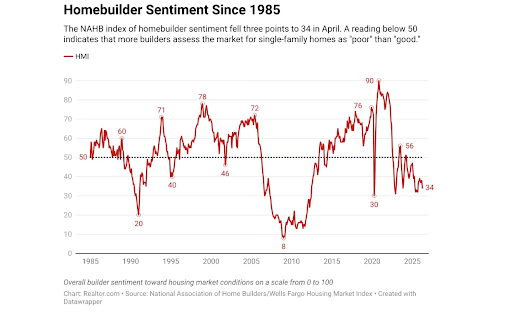
And while the dogs are wagging their tails, builders are not feeling as happy. Homebuilder confidence just dropped to its lowest level in eight months, due to the tumultuous market. I’ll dig into what this signals for investors, pet-driven housing demand, a luxury home with exotic residents, and what’s driving top brokerages. |
|
|
Here's what you need to know today: |
|
|
According to the American Veterinary Medical Association, nearly 43% of US households own at least one dog and 32% own at least one cat, totaling over 87 million dogs and 76 million cats nationwide. That’s tens of millions of buyers making decisions with their pets in mind.
A survey by Realtor.com found that many buyers evaluate homes through an “animal-first lens,” prioritizing features like fenced yards, durable interiors, and pet-friendly communities. I’ve witnessed this trend firsthand with many of my clients explaining that a fenced-in yard or the ability to add one was a top priority due to having a dog. I even had clients specifically submit an offer on a home with a screened-in porch because they knew their cat would love it.
|
If a home doesn’t work for their pet, many buyers are willing to walk away. What’s driving this is practicality. Buyers aren’t just considering aesthetics; they’re thinking about day-to-day living. Features like scratch-resistant flooring, easy-to-clean finishes, and secure outdoor space aren’t upgrades: they’re essentials. And when those features are already in place, buyers are often willing to pay more to avoid having to make changes after closing.
This is where the shift becomes important for the market. Homes that meet these lifestyle requirements are standing out more, while homes that don’t may face more friction. In a market where buyers are already selective and in control in many areas, these details are driving buyer interest. What this means for agents:
🐾Lead with pet-friendly features: If a home has a fenced yard, durable flooring, or is located in a community with pet-friendly policies, highlight it immediately in your marketing plan. Look for peripheral pet-friendly features outside the home. Are there walking paths nearby? Local dog parks? Mention these in your listing description and marketing materials.
🧠Ask discovery questions: Early in your relationship with your buyer, ask about their needs and pets. This will help you identify options faster and avoid showing homes that won’t work.
📖Know the rules: HOA and condo pet restrictions can instantly kill a deal. Always verify policies upfront before showing the home. If you are listing in a community with restrictions, clearly state the pet rules in your marketing to attract the right buyers and avoid wasted showings. |
|
|
Are you seeing your buyers prioritize pet-friendly features in their home search? |
|
|
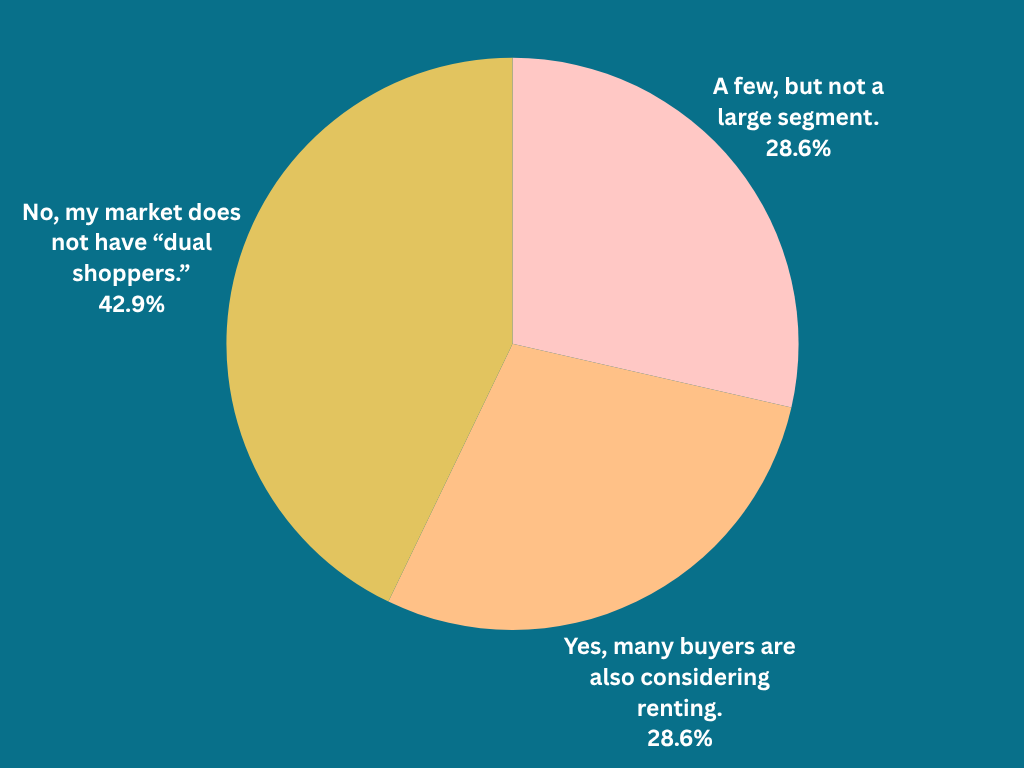
Are you seeing "Dual Shoppers" in your market? |
|
|
Homebuilder sentiment is firmly in negative territory. Rising interest rates, increasing material costs, and economic uncertainty are making it harder for builders to price homes and plan new developments. On the surface, this looks like a slowdown, but for investors, it’s a signal worth paying attention to.
Builders are already adjusting, cutting their prices, pulling back on incentives, and rethinking future projects. Nearly two-thirds of builders are seeing rising material costs tied to energy prices, and a majority are struggling to confidently price new builds. Builders are hesitating on new projects and tightening their pipelines. |
For investors, this shift changes the playbook. When builders slow down, future inventory shrinks. Less construction today often leads to a tighter supply tomorrow, especially if demand holds. This creates opportunity across the board. Investors who build, flip, or acquire during this window are positioning themselves to benefit from reduced competition and stronger back-end demand.
This doesn’t just impact resale. It affects rental demand too. When fewer homes are built, and fewer buyers can afford to purchase, more people stay in the rental pool. That can support rent growth and occupancy in the months ahead. Investors who can secure or create inventory now may find themselves in a stronger position as supply tightens. What investors are prioritizing now: |
- Creating or securing inventory: Investors are focusing on building, flipping homes, and acquiring properties, while competition and builders pull back.
-
Assets with multiple exit strategies: Properties that can be sold or rented depending on market conditions are becoming more attractive.
- Demand-driven markets: Investors are targeting areas where population and rental demand remain steady despite economic uncertainty.
|
👀Watch buyer traffic trends
🔎Monitor builder activity in your target markets 💰Review your exit pricing strategies |
|
|
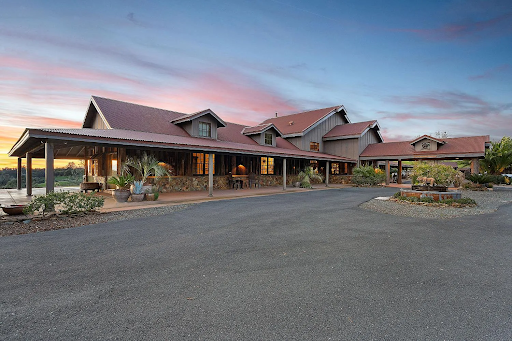
Looking to buy a zoo? Set across 137 acres in Northern California, a $5.1 million estate has hit the market, and it pushes the definition of luxury. The single-level lodge-style home offers five bedrooms, three bathrooms, and is designed for seamless indoor-outdoor living. The property also contains multiple additional guest structures and a designated outdoor bathhouse.
|
Beyond the home’s walls, the estate, titled Oak Hill Preserve, contains resort-style amenities like a golf driving range with an island green, shooting and archery ranges, and bocce courts. Amenities such as these reflect a broader luxury trend, in which high-quality sports features can command a premium.
What really makes this home stand out are the residents who may stay after the sale. The home is not only a luxury property but a curated environment featuring five ponds, a spring-fed waterfall, miles of private trails, and a professionally managed collection of exotic wildlife. African watusi cattle, zebras, ostriches, sulcata tortoises, and alpacas currently call the estate home, and depending on the buyer, will be sold alongside the home.
|
This kind of offering sits within a more controversial, but longstanding, corner of luxury. For centuries, the ultra-wealthy have used rare and exotic animals as symbols of status, from royal menageries to modern celebrity ownership. Supporters of exotic animal ownership frame it as a curated conservation lifestyle design, while critics argue it raises ethical concerns around commodification and care.
From a market perspective, this home reflects the broader shift in how wealth is being expressed through real estate. Luxury buyers are chasing experience, control, and differentiation. What's more different than zebras? In a market where luxury homes can feel interchangeable, properties that stand apart gain buyer attention. Oak Hill Preserve is equal parts residence, retreat, safari, and statement. The residence reflects where the high-end market is heading, toward ownership that is as much about identity and experience as it is about real estate.
Agent takeaways: 🦓Be fluent in niche luxury features: Unique elements like exotic animals, private ranges, or specialty amenities require more than surface-level knowledge. Agents need to understand regulations, maintenance, and buyer concerns to position them effectively.
🏀Highlight lifestyle amenities: Features like courts, ranges, and recreation spaces add value when they feel cohesive. Don’t just mention these amenities, show how they can fit into a complete lifestyle offering. These features also make for powerful content. Film your listing’s amenities in action and highlight how a buyer would actually use the space, not just what it is.
🌍Sell the experience: At this price point, a home isn’t just a property; it's a fully built lifestyle. When a home offers something immersive, whether it’s land, wildlife, or recreation, lead with the experience and emotional pull. |
|
|
The top 10 US brokerages accounted for nearly $1 trillion in sales volume in 2025. The real story, though, isn’t who’s at the top; it’s how they’re getting there. Across the board, the industry is seeing the same pattern: sales volume is holding or increasing, while transaction sides and agent counts are declining. In simpler terms, fewer agents are doing more business. The top brokerages are not winning by having more agents; they’re winning by having more productive agents. Compass, for example, increased volume by over 13% while slightly reducing agent count. This signals a clear shift; performance is no longer evenly distributed. Your top agents may be carrying a disproportionate share of your brokerage’s production.
As a broker, this changes how you need to operate. Growing your brokerage is no longer about adding more agents; it’s about developing, retaining, and maximizing the agents who can actually produce. The gap between top performers and other agents is widening, and brokerages that recognize this are doubling down on their highest-value agents.
Your most productive agents should be your biggest investment. These agents are driving your revenue, your reputation, and your growth. What’s just as important is identifying the agents who have the potential to become top producers. The brokerages that win in this market aren’t just supporting top producers – they’re building them. If you’re not investing in both, you’re risking your brokerage’s success. |
What’s working right now: |
- High-performance coaching: Top-producing agents are receiving more advanced personalized coaching focused on scaling production, not just maintaining it.
-
Top producer retention strategies: Brokerages are identifying their highest-production agents and building retention plans around them, including support, incentives, and growth opportunities.
-
Mentorship pairing: High-potential agents are being paired with top producers to accelerate learning through real-deal exposure, not just classroom training. I’ve personally seen this work from both sides. As a newer agent, I was mentored by a top producer, which fast-tracked my success. Now, as a more seasoned agent, I do the same. I allow agents to shadow me, and I watch them use that experience to quickly elevate their own production.
|
|
|
🏗️Modular construction could reshape real estate supply: Realtor.com highlights growing demand for factory-built homes as builders look for fast, more cost-effective ways to address housing shortages.
📉 Mortgage rates remain volatile: Bankrate reports that the average 30-year fixed rate is around 6.33%, with ongoing economic uncertainty keeping borrowing costs elevated.
🚨Foreclosures signal rising pressure in the housing market: Homes.com data shows filings jumped 28% year over year, making 13 straight months of increases as some homeowners struggle with equity and affordability. |
|
|
|
Sophia Doyle is a staff writer at The Close and a licensed New Jersey real estate agent with hands-on experience in residential real estate. Sophia brings real-world insight into today’s housing market, combining on-the-ground agent experience with a strong background in communications. She understands the full transaction lifecycle, from lead generation and client relationships to marketing strategy and deal execution. Through her writing, Sophia delivers clear, practical guidance to help agents navigate an evolving industry with confidence and creativity.
|
|
|
Advertise in The Close The Close is a TechnologyAdvice business © 2026 TechnologyAdvice, LLC. All rights reserved. TechnologyAdvice, 3343 Perimeter Hill Dr., Suite 215, Nashville, TN 37211, USA. |
|
|
|